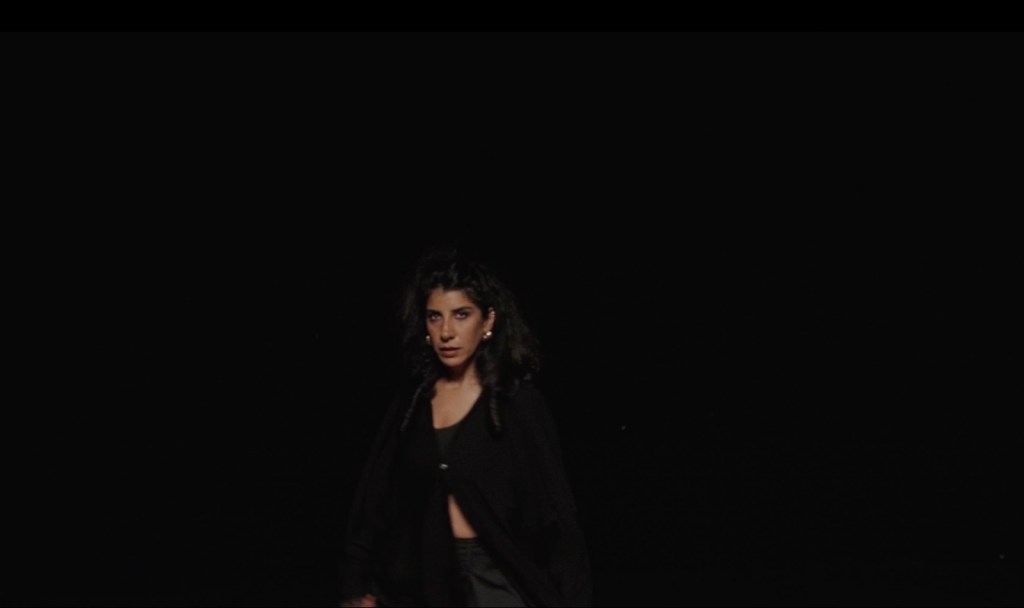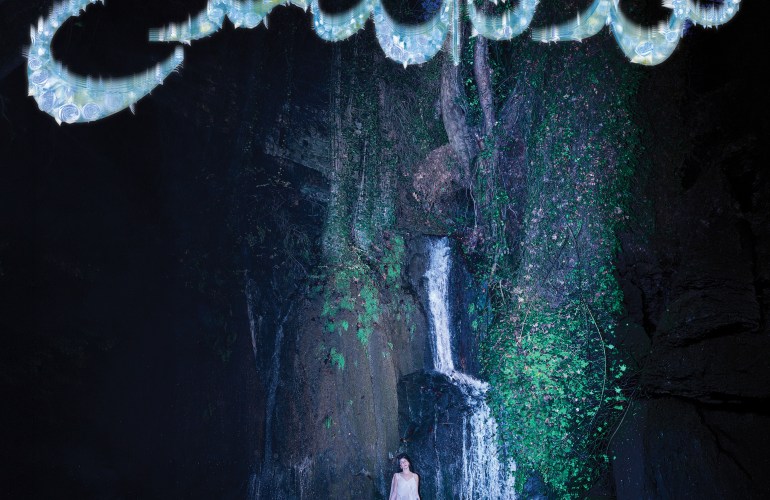
Acclaim for Sandy Chamoun’s solo album Sawt El Doumouh, released by Ruptured in June 2026.
“This is a mournful record and a defiant one, artful and adventurous, rooted in multiple traditions without feeling like an exercise in any of them. The connections Chamoun makes between Tarab’s emotional directness, Cantu’s polyphonic ritual structure and the granular possibilities of electronics feel genuinely synthesised rather than assembled. And the songs themselves, whether they soar or sigh, capture a reality of mixed hope and despair that’s more nuanced than what the gravity of the subject matter typically inspires. That’s not a small thing to manage when the material is this heavy, and the times are what they are.” – Zaid Kreshan, SceneNoise https://scenenoise.com/Reviews/Sandy-Chamoun-s-Sawt-El-Doumouh-Turns-Sorrow-Into-Something-Stranger
“Sandy Chamoun’s second solo record was planned as a response to her native Lebanon’s landscape, combining the Arabic vocal tradition of tarab which she was brought up singing with cantu, polyphonic Sardinian folk. When genocide and war made this impossible she reframed the project as Sawt El Doumouh. Chamoun’s layered, winding vocals are generally in dialogue with just one or two other elements, as on ‘Shahed’ where they wash and flow around a simple, dry repeating hand drum, or the billowing clouds of organ on ‘Ward W Shok’. Chamoun also makes use of Auto-Tune to produce eerie, supercharged ululations. The emotional charge seems to flicker between the extremes of grief and hope, but is probably best thought.” – Sam Davies, The Wire
Made in reaction to the ongoing horrors in Gaza, as well as Israel’s brutal war on Lebanon, the album’s mournful sonics are reflected in its title: Sawt El Doumouh (The Sound of Tears). Yet while its dark, industrial soundscapes can make for a somewhat harrowing listen, the music is grounded in beauty. . Sardinian cantu and Arabic tarab singing traditions are reinterpreted on tracks like ‘Wa’, the title-track and ‘Ataba’, with Chamoun’s polyphonic vocalisations swirling majestically around ambient atmospherics, discordant violins and percussive blasts. ‘Shahed’ offers light among the shadows: its urgent, stumbling polyrhythms and handclaps underpinning layered, trancelike vocalisations before its bubbling, synth-led denouement.” – Paul Bowler, Songlines https://www.songlines.co.uk/reviews/sawt-el-doumouh
“On opening track ‘Khafiy خفي’, Chamoun’s voice is sculpted by AutoTune and placed into an ecstatic clearing, accompanied only by slow-motion drums and scraping resonances. But on the brilliant ‘Shahed شاهد’, her tarab folk song dissolves mid-way through into the ether, the syncopated percussion turning into 4/4 claps and a circle of voices emerging, met eventually by Sayhoun’s microtonally-tuned modular bleeps. It’s music that can’t help but affect the body entirely.” – Boomkat https://boomkat.com/products/sawt-el-doumouh
“Opening with heavy drums and keening vocal lines, the record balances weight and lift. Tracks like ‘Ward W Shok’ and the title piece move between restraint and release, while ‘Shahed’ pairs desert-like rhythms with fluid synth textures, inspired by an imagined scene of distance and witness. Throughout, Chamoun’s compositions carry both fragility and resolve.” – Norman Records https://www.normanrecords.com/records/215585-sandy-chamoun-sawt-el-doumouh
“While SANAM has been a crucial vessel for Chamoun, on Sawt El Doumouh she revels in the spotlight, with songs that move fluidity, counterbalancing darkness and autonomy. The result is a snapshot of her everyday reality and a celebration of music and its hidden powers.” – Simon Kirk, Sun 13 https://sun-13.com/2026/07/10/sandy-chamoun-sawt-el-doumouh/
“Despite the sound of tears, Chamoun’s album imagines ways to find light and hope, and you can hear that in the way her voice rises over heavy percussion and electronics. Beautiful.” – Peter Hollo, Utility Fog broadcast https://bit.ly/3QsYcD4
“Beirut-based Sandy Chamoun summons flickers of light from sadness.” – Dragoș Rusu, The Attic https://theatticmag.com/news/2535/the-monthly-dig-_-june-2026.html
Included in Rapid Fire Album Recommendations for June 2026 by Outside Noise: https://bit.ly/3SiYe0N
Sawt El Doumouh review by Nowamuzyka.pl: https://www.nowamuzyka.pl/2026/06/07/sandy-chamoun-sawt-el-doumouh/
Sawt El Doumouh review by Anxious Musick Magazine: https://anxiousmagazine.pl/recenzje/sandy-chamoun-sawt-el-doumouh/
Read: “Beyond and Above Sandy Chamoun’s Sounds of Tears”, by Christina Hazboun: https://leguesswho.com/news/sandy-chamoun-interview-lgw25
Listen/Order