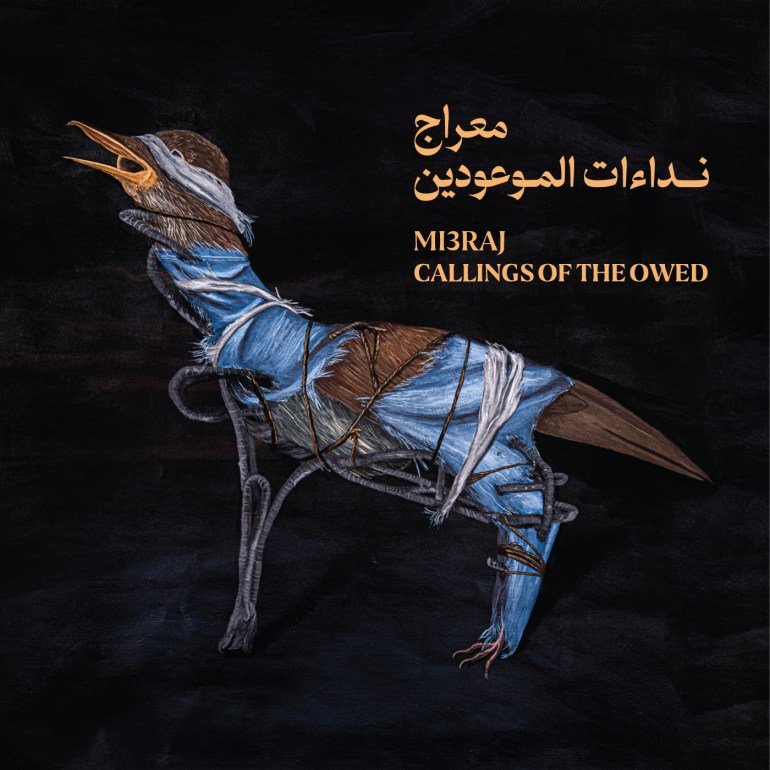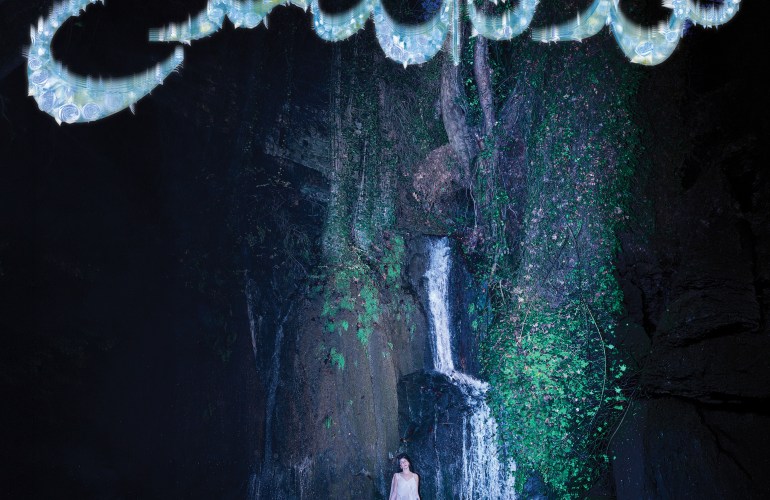
Acclaim for Callings Of The Owed, the second album by Egyptian experimental duo Mi3raj, released by Ruptured in January 2026:
“Miraj’s Callings Of The Owed features contemporary poetry by Cairo based Mohamed Tarek Moussa, accompanied by Abdelrahman Shaat’s frequently uncanny and off-kilter production. Shaat’s skulking and shadowy production renders the pieces universal – ghostly tales of displacement and unease that transcend language. At times, Moussa’s vocals sound stretched to breaking point, even as the accompanying track rattles along below, a persistent and uncaring presence when stacked against a desperate vocal.” – Rosie Esther Solomon, The Wire
“Humming, almost elegiac songs that pool out slowly, Abdelrahman Shaat’s production consisting mostly of sustained tones that stretch single notes out to meditative length. Moussa’s voice—sometimes doubled, sometimes tripled, sometimes harmonizing with himself—tumbles over the notes, evoking both longing and delirium in equal measure.” – J. Edward Keyes, Bandcamp Essential Releaseshttps://daily.bandcamp.com/essential-releases/essential-releases-january-23-2026
“This is a beautiful album that mirrors Toni Geitani‘s “Wahj” in some ways – Moussa’s Arabic lyrics which he speaks, sings, multi-tracks and sometimes growls, are accompanied by electronics, live and processed instruments and beats from Shaat. Wonderful stuff.” – Peter Hollo, Utility Fog broadcast on FBi Radiohttps://www.fbi.radio/programs/utility-fog/episodes/utility-fog-18th-january-2026
“Voice and music have an alchemic connection in these songs which combine to give the Mi3raj soundscape a clear personality. As Moussa purrs, growls, whispers, preaches, speaks and sings within Abdelrahman Shaat’s intuitive sonic foundation, the tension and sense of loss at the heart of Callings Of The Owed reaches out. These stories told from the tangle of their home city Cairo resonate to the struggles between tradition, change, loss, love, power and destruction.” – John Parry, Backseat Mafiahttps://www.backseatmafia.com/album-review-mi3raj-callings-of-the-owed-powerful-and-poetic-electronic-fusion-from-cairos-rising-underground-scene/
Acclaim for May a soft sun bless your sky while you wait for the inevitable, the latest album by Lebanese experimental musician Charbel Haber, released by Ruptured in April 2026.
“So, it’s a journey. In music and stories, those usually go from darkness to light, or from and then back to home. As the album proceeds through tracks like “One last stroll in the garden of light,” it becomes a journey without a map—a quest for a place that may be safe and, if not that, then still; and if not that, then maybe a place where one can take a breath and think clearly.” – George Grella, Bandcamp ALBUM OF THE DAYhttps://charbelhaber.bandcamp.com/album/may-a-soft-sun-bless-your-sky-while-you-wait-for-the-inevitable
“An utterly gorgeous minimalist ambient/classical/record from this Lebanese producer is as gentle and moving as a sunrise.” – Bandcamp New & Notable, 24 Apr. 2026
“At times, Haber’s music evokes the cinematic post-rock of bands like Sigur Rós and Explosions in the Sky, but his latest full-length is neither as chilly as the former nor as grandiose as the latter. May a soft sun bless your sky while you wait for the inevitable may cast its gaze toward the heavens, but with its inherent warmth, not to mention the softly crackling static that is present pretty much throughout the record, it’s an effort that crucially still feels very human.” – Shawn Reynaldo via Substack https://firstfloor.substack.com/p/charbel-haber-may-a-soft-sun-bless
“The album reveals itself as a series of inner reflections, with the listener entering mid-thought. The tracks arrive without defined beginnings or endings, like suspended sonic scenes already in motion before we encounter them. Loops stretch and erode over time—beautiful, luminous, yet almost always clouded by uncertainty. “One last stroll in the garden of light” offers a strong example: bright and inviting, with sharp ornamentations rising from within the drones to catch the light, before the drones and fragmented passages pull it back toward darkness.” – Mohammed Ashraf, Ma3azefhttps://bit.ly/4eqjpHj
“Between futuristic promise, morbid surrealism, and tender melancholy, an atmosphere arises that feels both otherworldly and fragile. Tracks like “This show starts in the future,” “One last stroll in the garden of light,” “I stutter when I speak of love and death,” and “The unfortunate meeting of an accident and the goddess of time on a dissecting table”—the latter a reference to Louis Aragon and simultaneously to the legendary debut of Nurse With Wound—evoke a floating theater of images in which time, form, and memory merge into one another.” – Uwe Schneider, African Paperhttps://africanpaper.com/2026/05/02/charbel-haber-may-a-soft-sun-bless-your-sky-while-you-wait-for-the-inevitable/
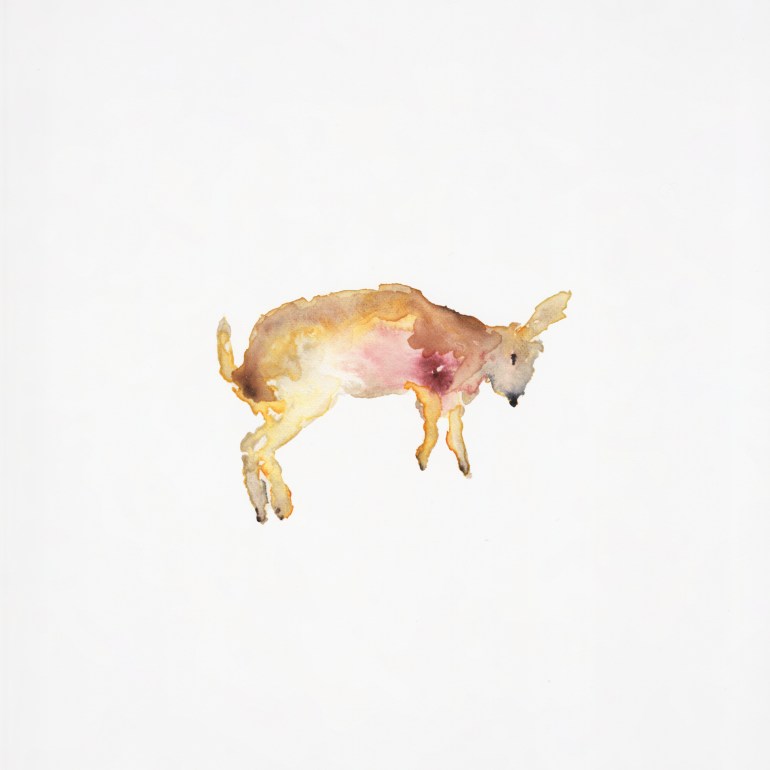
“The gentleness of Charbel Haber’s new album conceals emotions and places, offering a renewed way of inhabiting the world in times of war and exile. The cover artwork, by Ali Cherri, resonates deeply—its correspondences are striking, unsettling, and never forgetful.” – Joseph Ghosn via Substack https://substack.com/@josephghosn/
“The album’s sonic architecture is deeply tied to its conceptual concerns. Loops evolve like consciousness itself—constantly updating, feeding back into their own transformations. Death is not treated as an event but as a horizon: something that shapes the trajectory of the sound without ever fully arriving. This gives the music its peculiar tension—slow, restrained, yet always moving toward an unseen endpoint.” – A Closer Listen https://acloserlisten.com/2026/04/22/charbel-haber-may-a-soft-sun-bless-your-sky-while-you-wait-for-the-inevitable/
“Here warbling, tinny guitar samples float between cavernous drone and what sounds like a chorus of angels, recalling some of Jefre Cantu-Ledesma’s early drone work.” – Graham Latham, anything / everything newsletter https://anything-everything.ghost.io/mad-enough-to-stay/
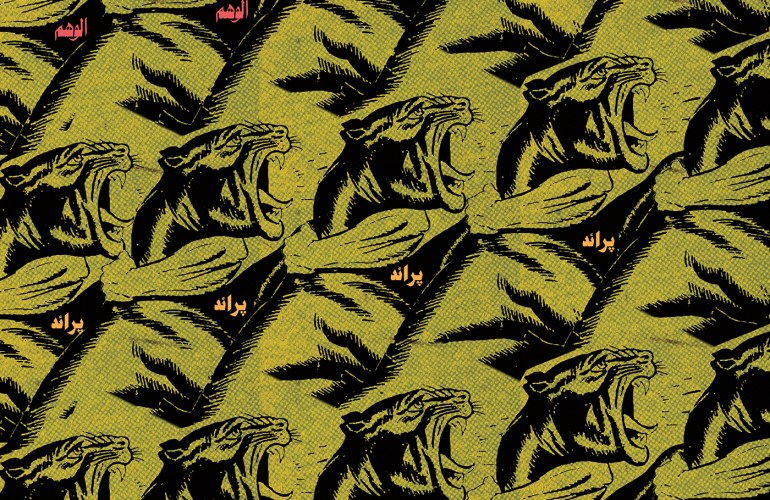
Acclaim for Al Wahem, the latest album by Lebanese/Swiss electronic duo PRAED, released by Ruptured & Annihaya in March 2026:
“Opening title “Al Wahem” track sets the tone, 19 minutes of intense but groovy shaabi rhythms strafed by Conca’s snaking clarinet and guest vocals from Mayssa Jallad. With its insistent rhythms and glimmering sea sprays of synth, ‘Al Maraya’ is reminiscent of the ecstatic peaks of late period drum circle Boredoms, while the closing ‘Assarab’ seems designed to prove a live band can summon up the sort of intense energy of electro-shaabi musicians like Islam Chipsy. A wild, ecstatic listen from start to close.” – Louis Pattison, The Wire
“There’s a solid equation at play, weaving together electronic, jazz, and Egyptian shaabi threads into a shifting, imaginative sound—one that delights the ear with its hallucinatory nature and layered ornamentation. The blend of jazz and shaabi brings to mind the work of Salah Ragab, though Al Wahem feels richer and more expansive in its instrumental distribution, rhythmic structures, and modal transitions, culminating in the closing track “Al Sarab”, notable for its rhythmic framework, keyboard solo, and dense sonic textures.” – Rami Abadir, Ma3azefhttps://bit.ly/48G79Pd
“The strings are strong, but sit just below the synths on the equality meter, with underlaid drones frequently occupying the frequencies desired. ‘Al Maraya’ offers circular-breathing clarinet spirals for full ascendance, with other reed-layers stoking up a repeated theme over a massively rattling percussion wall. Sounding just as much Egyptian as Lebanese, this is cross-currented fusion at its most uncompromising.” – Martin Longley, Songlines 4/5https://www.songlines.co.uk/review/al-wahem
“Performing in a style comparable to Egyptian shaabi music, which in itself borrows heavily from underground street culture, the pairing of Paed Conca and Raed Yassin leads to some entrancing dance music, relentless in its groove and constantly mutating over the course of the album.” – Reuben Cross, FarOut Magazinehttps://faroutmagazine.co.uk/six-great-albums-you-may-have-missed-from-march-2026/
“Al Wahem feels like a direct development of their orchestra music, where the duo have expanded not only their musical palette but also increased their personnel.” – Cyclic Defrost
“There is always movement, even when it resists clear direction. The pull is immediate, sometimes disorienting, often physical. Al Wahem channels a popular form with care, while pushing it somewhere more volatile, more open-ended.” – Kristoffer Cornils, Musikexpress
“Sounds from North Africa and the eastern Mediterranean meet colder, urban textures, while traces of belly dance motion fold into motorik repetition. This is music where distances collapse. Different vocabularies coexist without hierarchy, sharing space, altering each other as they move.” – Massimiliano Busti, Blow Up
“PRAED isn’t interested in showiness, nor in complexity as a badge of intelligence. The duo knows exactly what to do with its materials and, just as importantly, what not to do with them. No grandstanding. No decorative folklore. No avant-garde posturing. Just music that moves forward with intent, that uses repetition as a tool for shifting ground, and that manages to make what once felt stable seem strange. That may be its greatest strength: to make a language that feels immediately physical, yet can’t be exhausted in a single listen.” – Solenopolehttps://solenopole.com/chronique/praed-al-wahem/
“The more compact format imbues the music with an unexpected sense of propulsion and dynamism as a swaying motorik starts pushing along melodic loops and synth stabs into delirious cuts. The whole work is so coherent and functions so well that it feels a sin to pick it apart.” – Research Music
“PRAED confirm their ambition and vision with a hypnotic album that blurs the line between acoustic and electronic sounds through a relentless juxtaposition of elements: “Al Wahem” deludes, fascinates, and demands you lose yourself within it.” – Piergiuseppe Lippolis, Music Maphttps://www.musicmap.it/recdischi/ordinaperr.asp?id=12495
“It’s psychedelic, swirling, extremely rhythmic, a free jazz of Lebanese & Egyptian music… As always this music is full of joy and yearning, and never-ending forward motion.” – Peter Hollo, Utility Fog broadcast
“With dark minimalism orchestrated from the bottom of the vortex, if We live in sand doesn’t reduce you to tears, then you’re probably hollow inside. The best art often comes from the darkest places; the same ones many of us will never encounter.” – Simon Kirk, Sun-13https://sun-13.com/2025/10/10/snakeskin-we-live-in-sand/
“There’s a chilling disconnect at the heart of Lebanese duo Snakeskin’s third album, We live in sand: On the surface, their music invokes a lineage of wistfully melodic electronic pop. But once you dig into the album’s lyrics, a far bleaker scenario presents itself. Beneath the sweetness of the music, Sabra lays bare the tragedy playing out across the border—and on our screens, in our feeds, in our thoughts and consciences.” – Phil Sherburne via substack https://futurismrestated.substack.com/p/fr-140-spheres-nexuses-horizons
“There’s an uncompromising authenticity to the album, presenting each track as a visceral interpretation of mourning. Amidst the starkness, hope could easily seem lost. Yet the album’s most powerful moments emerge in subtle but striking sparks of defiance and resilience; and that, in itself, is a form of hope.” – SceneNoisehttps://scenenoise.com/New-Music/Snakeskin-s-We-Live-in-Sand-Captures-Hope-Amidst-Destruction
“There’s an atmosphere of grief, anger and frustration throughout, but as with so much of the music Sabra and Tabbal make — together or separately — there is hope here too.” – Arab Newshttps://www.arabnews.com/node/2619195/lifestyle
“Over a decade of collaboration, producer Fadi Tabbal and singer-songwriter Julia Sabra have sculpted a sound that is both melancholic and radiant: a haunting palette of reflection, collapse and resistance that keeps developing in their new album We live in sand.” – Le Guess Who?https://leguesswho.com/news/snakeskin-new-album
Acclaim for Ripe, the latest album by Lebanese shoegaze trio Postcards, released by Ruptured in April 2025:
“On a foundation of what many would consider shoegaze and dream-pop, while the band has moved sonically with each release, the Postcards remit has been held together by the emotive storytelling of Sabra, and on Ripe it reaches a crescendo. Fraught with tension and the chaos that overshadows everyday life in Lebanon, Postcards frame it through song; and while you can certainly draw a line to this in previous works, on Ripe the band are at their all-encompassing best, reaching new levels.” – Simon Kirk, Sun-13 https://sun-13.com/2025/03/27/the-long-road-in-conversation-with-postcards-julia-sabra-pascal-semerdjian/#more-27934
“For all its incandescent anger, it’s the stubborn resilience of Ripe that feels most affecting. Throughout the album, there’s a resolute commitment to perseverance, to standing one’s ground and honouring the extant beauty still visible through the rubble, to staying despite it all.” – Graham Latham, anything / everything newsletter https://anything-everything.ghost.io/mad-enough-to-stay/
“If previous Postcards albums were drenched in reverb-soaked melancholy, Ripe is what happens when that sadness curdles into fury. It is an album of contradictions: lush but raw, defiant yet wounded, intimate while also sounding like the collapse of a city.” – Chain DLK https://www.chaindlk.com/reviews/12752
“Postcards channel this violence into their music, crafting dreamlike landscapes where guitars cut through the canvas like blades. Ripe is born from pain and uncertainty, an album of defiance that blends brutality and vulnerability, noise and melody. Like a lighthouse in the fog, it searches (in vain?) for a possible way out.” – Ondarock https://www.ondarock.it/recensioni/2025-postcards-ripe.htm
“This is the soundtrack of burning youth, cigarettes over cityscapes, and late-night existential spirals. With the current situation in Gaza and Lebanon, the album takes on an even deeper resonance, its rawness mirroring the heartbreak, rage, and resilience of a region constantly on edge.” – Scene Noise https://scenenoise.com/New-Music/Postcards-Ripe-Is-a-Love-Hate-Letter-to-Beirut
“A project of sharp contrasts and blinding sweetness, Postcards manage to sound both angelic and nervy, shifting seamlessly between storm-like intensity and moments of pure, hushed beauty (…) Ripe is a rare surprise — an album that sustains curiosity with substance, style, and flashes of emotional clarity across its ten tracks.” – Sodapop https://www.sodapop.it/phnx/postcards-ripe-ruptured-t3-2025/
“Until now, the band was known for its mesmerizing blend of dreampop and shoegaze, carried by Julia Sabra’s airy voice floating over layers of synths. But with *Ripe*, the guitars storm into the space with fury. The trio’s sound becomes sharper, more cutting. The drums gallop, Marwan Tohme’s bass rumbles, and from this turmoil emerges a refrain that haunts the album’s opening track, ‘I Stand Corrected,’ echoing like a mantra throughout the record: ‘Destroy, rebuild, you know the drill.” – Djolo Cultures d’Afrique https://djolo.net/ripe-5eme-album-postcards-ne-dans-colere/
“A recent batch of new material from the Beirut label Ruptured just arrived at the shop. And though it is a challenge to single out just one release, my heart keeps returning to the fifth album from shoegaze trio Postcards. Ripe fills each gushing moment of this album with devastating imagery of smoldering buildings, poisoned blood, and barren shorelines. A challenging, shattering, necessary listen.” – Robert Ham, For The Recordhttps://www.wweek.com/music/2025/04/22/for-the-record/
“On previous releases, we heard echoes of various influences, but on Ripe, the band’s own voice comes through more clearly—the album’s title couldn’t have been better chosen. Ripe is a beautifully balanced record with a sound that leaves a lasting impression. Singer/guitarist Julia Sabra soothes at times with her warm, gentle voice, but she can also unleash its full power, perfectly complementing the driving rhythm section of drummer Pascal Semerdjian and bassist/guitarist Marwan Tohme.” – Luminous Dash https://luminousdash.be/reviews/postcards-ripe-ruptured-t3-records/#google_vignette
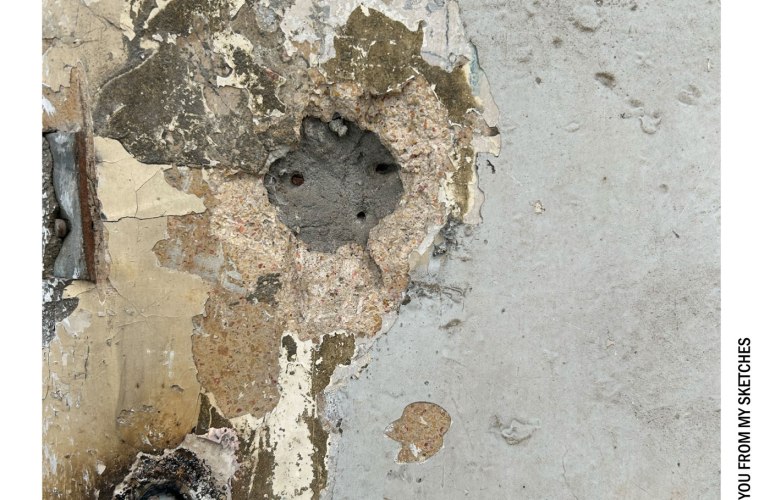
Acclaim for Fadi Tabbal’s I recognize you from my sketches, released by Ruptured in January 2025:
“Subsuming the sounds of others into his own, not in his typical bilateral mode of collaboration but through sampling, Tabbal seems to grapple with the binary between community and self. “I am all that is left,” he announces in the closing track. As the tidal synth pads wash over and retreat into tape hiss, the trace of the medium is the last to go. But this solitude is not an abandonment; empty tape always carries the potential to hold space for sounds yet unheard.” – James Gui, Pitchfork 7.5 https://pitchfork.com/reviews/albums/fadi-tabbal-i-recognize-you-from-my-sketches/
“10 tracks of somber ambient and rose-tinted noise—at times plaintive, at times anguished. I hear bits of Tim Hecker in the smoldering distortion crackling at the edges of his synths and guitars, and a Kranky-esque sensibility in general—in the mournful desert landscaping of “(keep pumping),” say, or the striated textures of “When we swam together,” translucent as quartz. Citing a lifetime of personal struggles—mental-health issues, loneliness, missed opportunities, the violence of Beirut itself—Tabbal calls the record “a breakup album between who we want to be and who we turned out to be.” That sounds like a bleak assessment, but by the end, his tough-love meditation yields something that sounds a lot like hope.” – Philip Sherburne, Futurism Restated https://futurismrestated.substack.com/p/futurism-restated
“A lot seems to happen here in semi-secret detail, which is not congruent with the more obvious, superficial events and at the same time interacts with them in an interesting way. At points like this one has to mention Tabbal’s musician friends – Julia Sabra, Charbel Haber, Anthony Sahyoun, et al: people who have repeatedly played an important role in the artist’s life and work and whose samples and quotations beneath the surface also shape the sound of this album, which fits well with the personal theme, because every biography, every personal memory would not be what it is without the influence of others. The semi-transparency of the sounds creates a tension that is never fully resolved and also leaves open the question of whether absence really is the only thing that protects life.” – Uwe Schneider, African Paper http://africanpaper.com/2025/02/08/
“Tabbal continues his long-standing conversation between self and community, exploring the ways in which personal and collective identities intersect through music.” – Cairo Scene https://cairoscene.com/Noise/
“This latest release, with the lovely title, I recognize you from my sketches, sees Tabbal develop his core sound with even more emotional depth and explores the spaces between memory, identity and personal growth.” – Norman Records UK https://www.normanrecords.com/records/
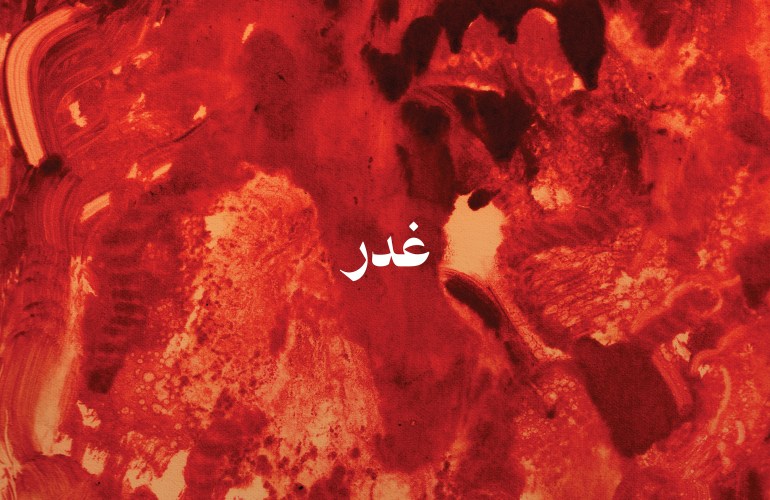
Acclaim for Sandy Chamoun, Anthony Sahyoun and Jad Atoui’s Ghadr, released by Ruptured in November 2024:
“On this record, scene stalwarts Anthony Sahyoun and Sandy Chamoun (SANAM) join forces with electroacoustic artist Jad Atoui in a reckoning with tradition that’s fueled by stuttering sub bass, searing guitar textures, and layers of melancholy vocals. Chamoun’s ghostly rendition of “Tahal Layl”—a Bedouin folk song—floats atop drones that expand into a blistering modular onslaught; “Al Moulatham,” on the other hand, interpolates reflections by Yousef al-Domouky on the genocide in Gaza over glitchy, Tim Hecker-esque ambient swells. Ghadr exhorts us to listen to both violence and repair, mobilizing tradition to face an uncertain future.” – James Gui, Ley Lines column, Bandcamp https://daily.bandcamp.com/ley-lines/ley-lines-november-2024
“When SANAM meets Jad Atoui, you know something excellent is going to happen. Amidst an escalating war and unprecedented bombardment, somehow Lebanon’s music scene still managed to churn out releases – all while many were organizing shelter and food for those in need. This one embodies that spirit as much as any of them. The album’s fiercely crackling and driving electronics fuse a sound so powerful, that it seems to channel lost and unwritten musics together with newly invented music, and Sandy’s vocals ring out as both song and scream. This music may be the best answer to 2024, transcending words alone.” – Peter Kirn, CDM Best Listening of 2024
“The all-encompassing noise, from guitars and electronics, is easily understandable here, but the beauty of Chamoun’s Arabic vocals exquisitely offsets these sounds even if we don’t understand the lyrics. There are deep and wide references here, including a quote from an Instagram post by Yousef al-Domouky about the genocide in Gaza, poetry from Paul Chaoul, and on the opening track, a traditional Bedouin folk song. It’s stunning work from start to finish.” – Peter Hollo, Utility Fog broadcast, FBi Radio
Acclaim for Julia Sabra’s Natural History Museum, released by Ruptured in November 2024:
“I loved Julia Sabra’s Natural History Museum—it was released at the end of the year and is quietly devastating. Her lyricism and sensitivity in timbre and harmony is akin for me to the great Linda Perhacs. The songs are intimate and infinite feeling at the same time—I love the raw and soft poetic settings of love and death. [Her] ruminations on the horrors of the war on Gaza, from the perspective of a Lebanese musician based in Beirut, are haunting. In particular, the ghostly organ and synth on the last track on the record, “Minor Detail”, evoke to me the frightening solemnity of death, and a feeling that the ground from underneath has been lifted and displaced.” – Julia Holter, The Fader Artist Picks 2024 https://www.thefader.com/2024/12/20/best-album-songs-2024-artist-picks
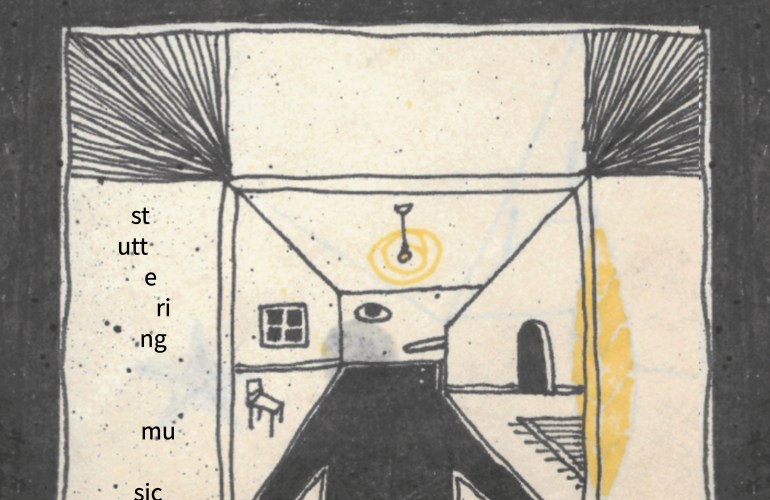
Acclaim for Yara Asmar’s Stuttering Music, released by Ruptured in November 2024:
“Stuttering Music is one of unfolding doubles, of sounds two times incomplete, of daydreaming dissociation without an anchoring center. It is the wonder of memory, the humorous poetry of being both somewhere and elsewhere, the context collapse of broken sequences – musical, historical, vital. Is a remembrance a duplicitous invention? As Asmar extends the sounds of the accordion like wings, she draws our attention to the falling feathers, each a unity, and yet also a fragment. The levity of their form betrays profound connections with everything around them, a swirl of the kaleidoscope, every singular strand of self inherently an other. It is sad, and yet also funny, how memory fools us into thinking like one. Which is why a Stuttering Music is also always beautiful, first as presence, then as absence.” – David M. Flores, A Closer Listen Top 10 Drone Albums of 2024 https://acloserlisten.com/2024/12/14/acl-2024-top-ten-drone/
Acclaim for Shatr Collective’s album Poppies in October, released by Ruptured in August 2024 (digital):
“What does poetry tell us in the time of catastrophe? Intertwining words and music with the sounds of colonial violence in Palestine and Lebanon, Poppies in October is the first recorded project from Lebanon’s Shatr collective, one that musically modulates “truth to power” while grounding experimental musical production with sound clips and media sources that sonically encapsulate our times.” – Christina Hazboun, Bandcamp, September 2024 https://daily.bandcamp.com/lists/i-found-it-on-bandcamp-friday-september-2024
“A challenging, moving album of poetry and modular synthesis from SHATR Collective. These pieces are visceral responses to the genocide in Gaza, indeed referencing the killing of Palestinian poets – Sahyoun’s “Salim” is about Salim Al Naffar. The emotion in the spoken words is palpable, and along with the stark electronics it can be difficult listening – as it probably should be.” – Peter Hollo, Utility Fog broadcast (FBi Radio), August 2024 https://utilityfog.radio/archives/2024/08/
“Beirut-based poetry group Shatr Collective, taking their name from the Arabic term for a hemistich or half-line in a verse, meditates on the power and limitations of literature as witness on Poppies in October. With English and Arabic poetry by Theresa Sahyoun and Nadine Makarem set to otherworldly, desolate synths by Sarah Huneidi, Poppies in October is a raw reflection on the unlikely thriving of human spirit and resistance in the midst of violent erasure. “No settler was ever able to kill a poem/ Which is where Refaat now lives,” recites Sahyoun on her paean to the eponymous Palestinian poet and academic Refaat Alareer, targeted and killed in an Israeli airstrike in December. Concluding with the hope inspired by Alareer’s life and legacy, Huneidi’s synths turn warm, even optimistic.” – James Gui, Ley Lines column, Bandcamp, September 2024 https://daily.bandcamp.com/ley-lines/ley-lines-august-2024