Mayssa Jallad’s live set from Trans Musicales 2024 is now up on KEXP.
Recorded at L’Antipode on December 04, 2024, during the Trans Musicales de Rennes festival, the set features several excerpts from Marjaa: The Battle of the Hotels.
With Julia Sabra (guitar, synth) and Pascal Semerdjian (drums), Mayssa delivers a striking performance, tracing key sites of the Lebanese Civil War and the ways physical spaces hold historical memory.
Watch the full set on KEXP at the link below.
Mayssa’s album Marjaa: The Battle Of The Hotels, released by Ruptured and Six of Swords in March 2023, is still available on both labels’ Bandcamp pages.
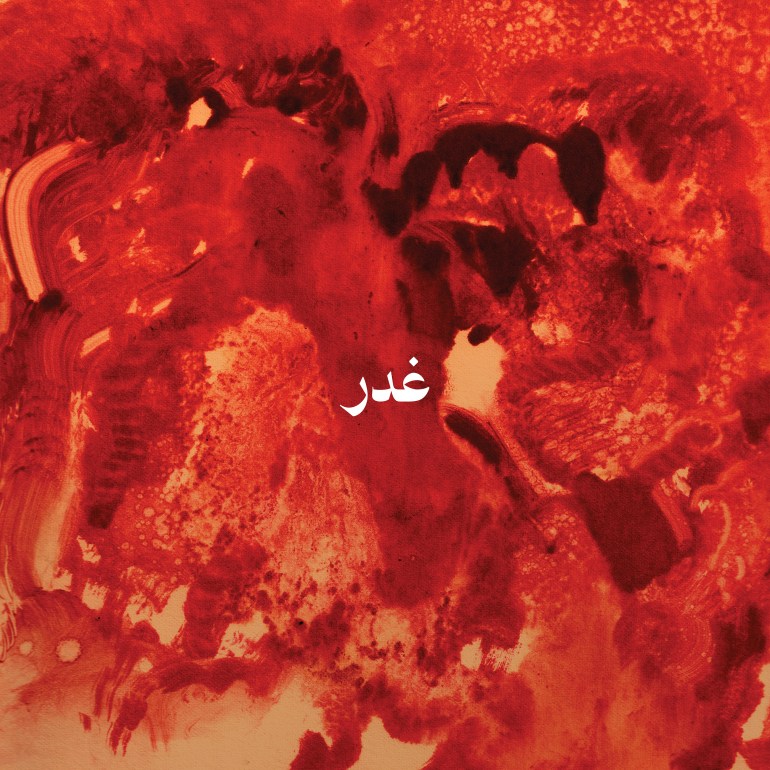
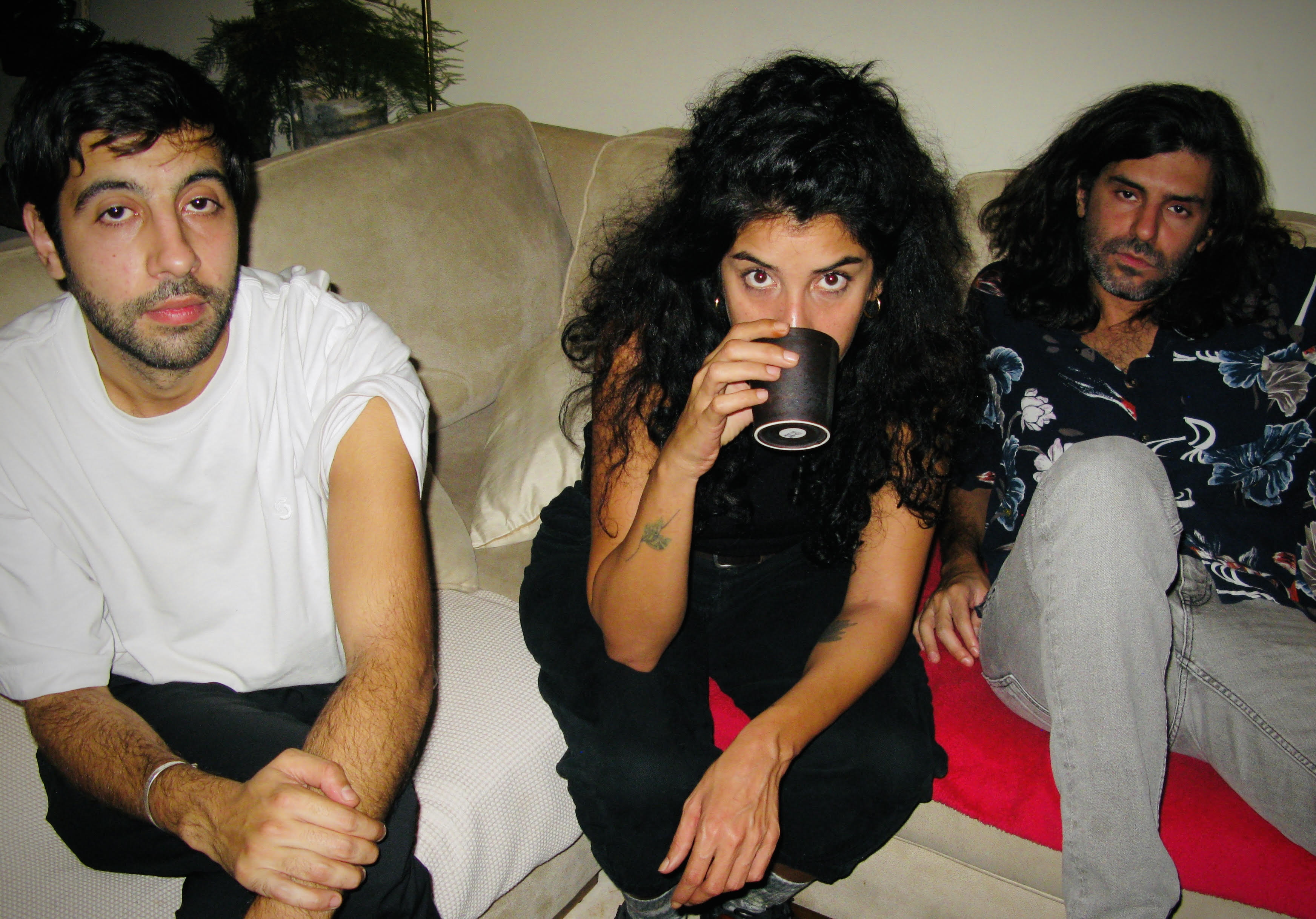
On Ghadr, Sandy Chamoun, Anthony Sahyoun and Jad Atoui play with chaos. Built on group improvisation, surges of coruscating electronics and distortion meld with vocals that, while stemming from a background in classical Arabic singing, seek to reroute tradition. “We explore rhythmic structures that don’t have specific time signatures,” says Atoui about his and Sahyoun’s use of synthesis to embrace the tension between order and chaos. “Sandy’s approach to singing isn’t necessarily very rigid either. We felt a common inspiration.”
The album, whose title imperfectly translates to ‘Treachery’, began on a residency in Switzerland while the trio were touring Europe (Chamoun solo, Atoui and Sahyoun as their duo NP). It was later finished in their home city of Beirut. The five tracks are built on vibrant circuits of guitar and modular synthesis, the former often acting as a trigger for the latter’s volatile output.
Chamoun’s vocals blend her background in classical Arabic music with free-singing, using tradition as a foundation for exploration rather than standards to follow. Apart from “Hayawanon Ghader (treacherous animal)”, all the songs’ lyrics pull from the archive. Opener “Tahal Layl” interprets a Bedouin folk song. “Bihali” is based on a tenth century poem by Abou Firas Al-Hamdani. “Al Moulatham” quotes an Instagram post by Yousef Al-Domouky about the war in Gaza. “Al Samaa” uses a text from contemporary Lebanese poet Paul Chaoul. “I’m working with my references, and with the music,” explains Chamoun. “It’s a playful place with my history and now.”
WATCH a video excerpt by Nour Ouayda
About the album’s title, Chamoun explains: “On this planet, the only thing that’s happening now is treachery. It’s the headline of our days.” Terror in Gaza, its shockwaves through the Middle-East and its place in longer histories loom over the record. However, while Ghadr reflects the present moment, it isn’t consumed by it. The trio agree the album reflects tenderness as much as anger. It’s audible in the effortless swings between abstract and soaring. The way Chamoun’s lyrics put ninth century odes to a bird and ancient Bedouin love songs next to personal reflections by Al-Domouky or Chaoul on real world tragedies.
Sonically and lyrically Ghadr is music of possibility and potential. The five tracks travel through unbounded terrain rather than along fixed paths. “I don’t like to pull the listener in one direction,” Chamoun continues. “You need to play with your imagination and not stick to one story and one meaning.” While the record reflects their state of mind as residents of Lebanon, and the uncertainty that entails, Sahyoun suggests they’re striving to reach beyond it. “We try to access parts of our subconscious and see what dimensions it has outside of what we’re witnessing day to day. When we play, there’s a rhythm between the three of us. We feel each other sway,”
Ghadr is the first release under the name Chamoun/Sahyoun/Atoui, but the trio’s connection is deeply rooted. Sahyoun and Chamoun are members of ecstatic rock collective Sanam. Atoui and Sahyoun’s explorations of synthesis, solo and as NP, are long-running. On Ghadr these histories form something new. A charged record which faces the world as it is while offering glimpses of something else.
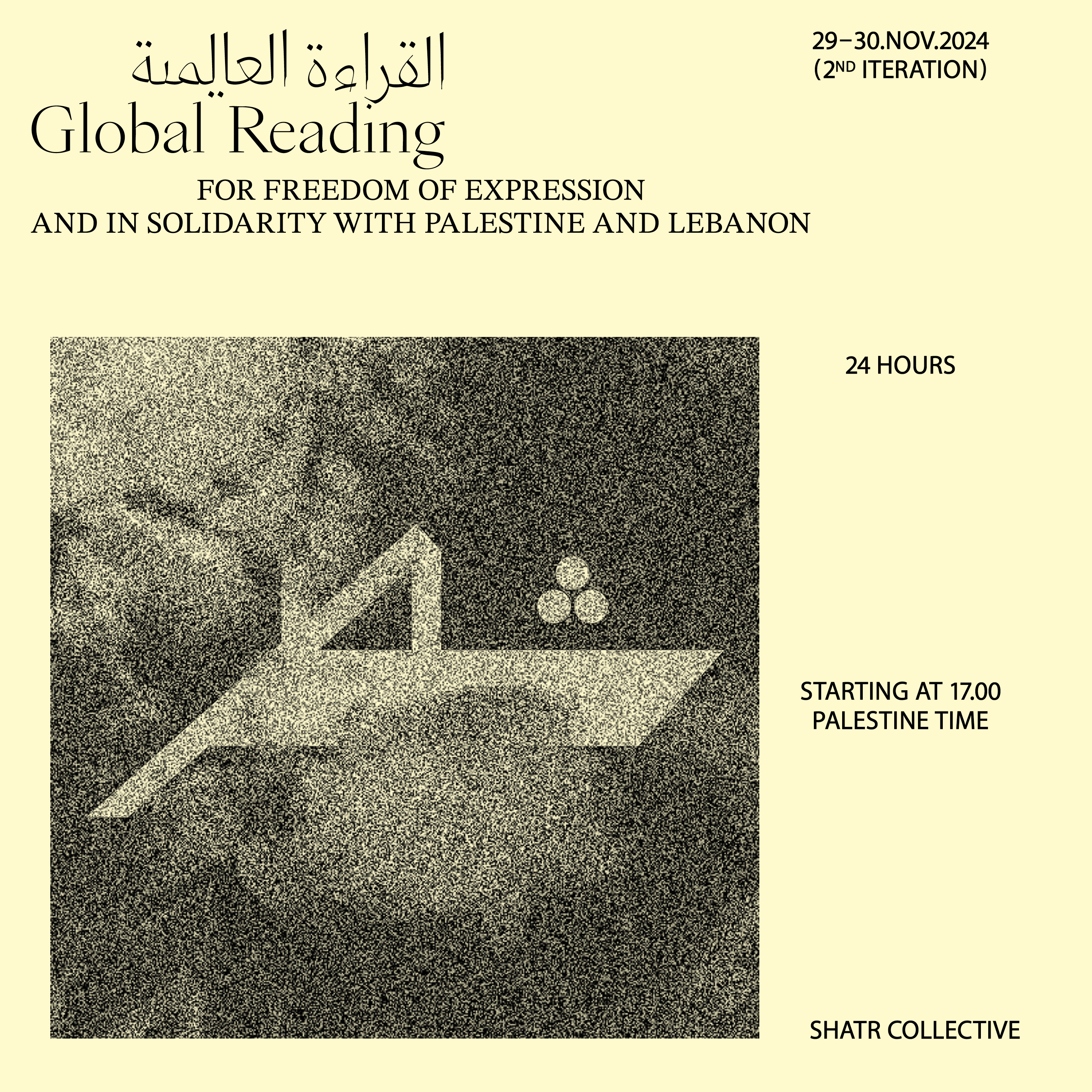
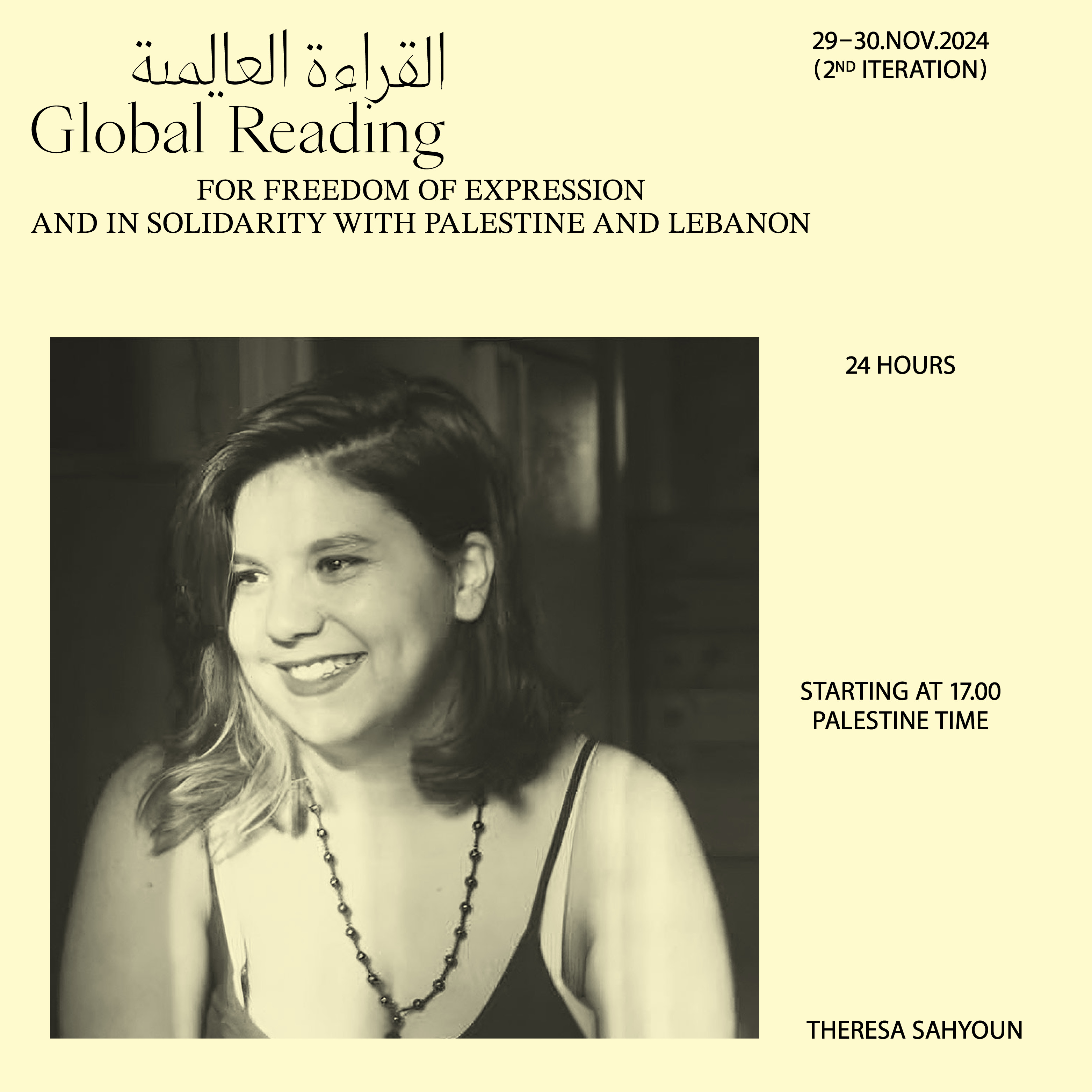
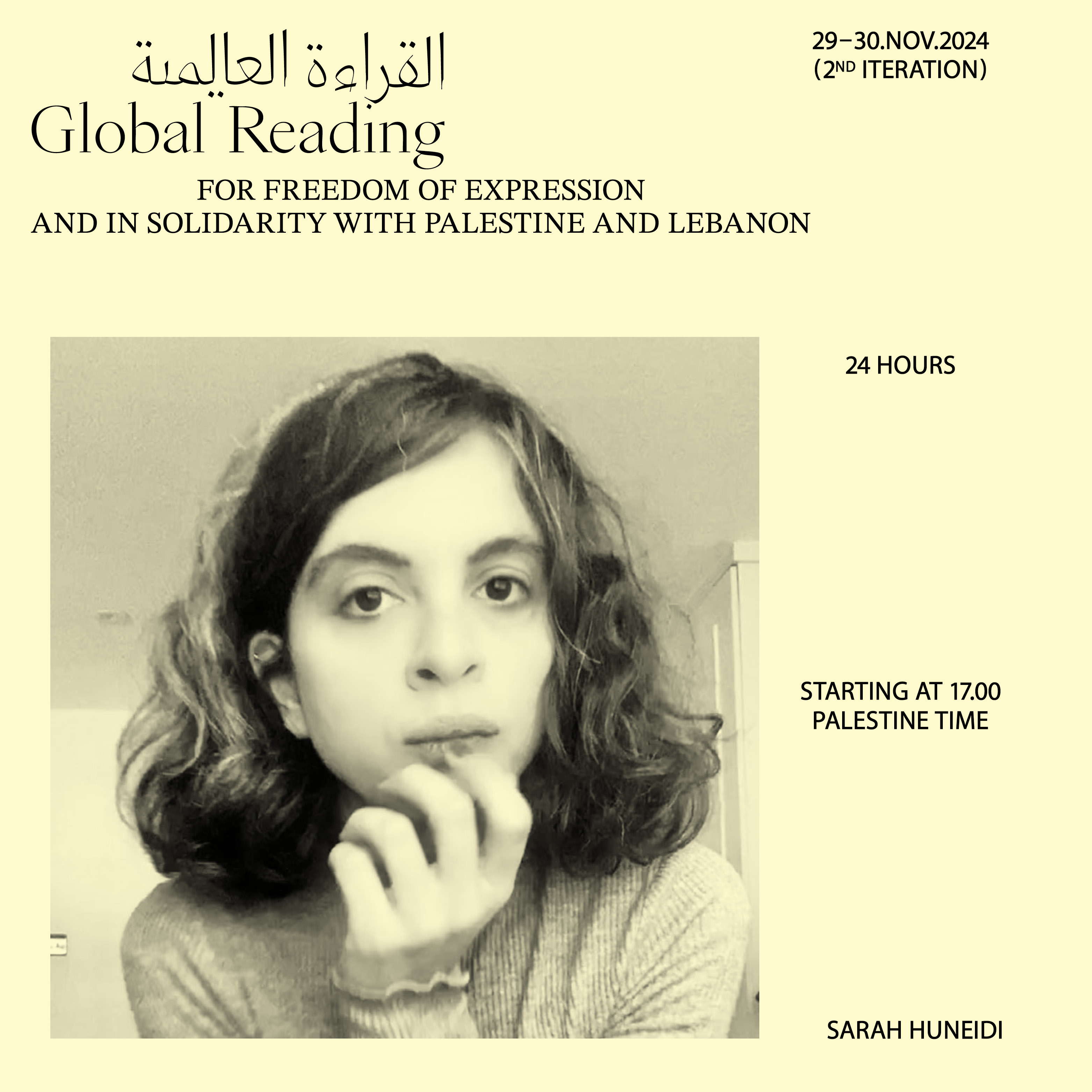
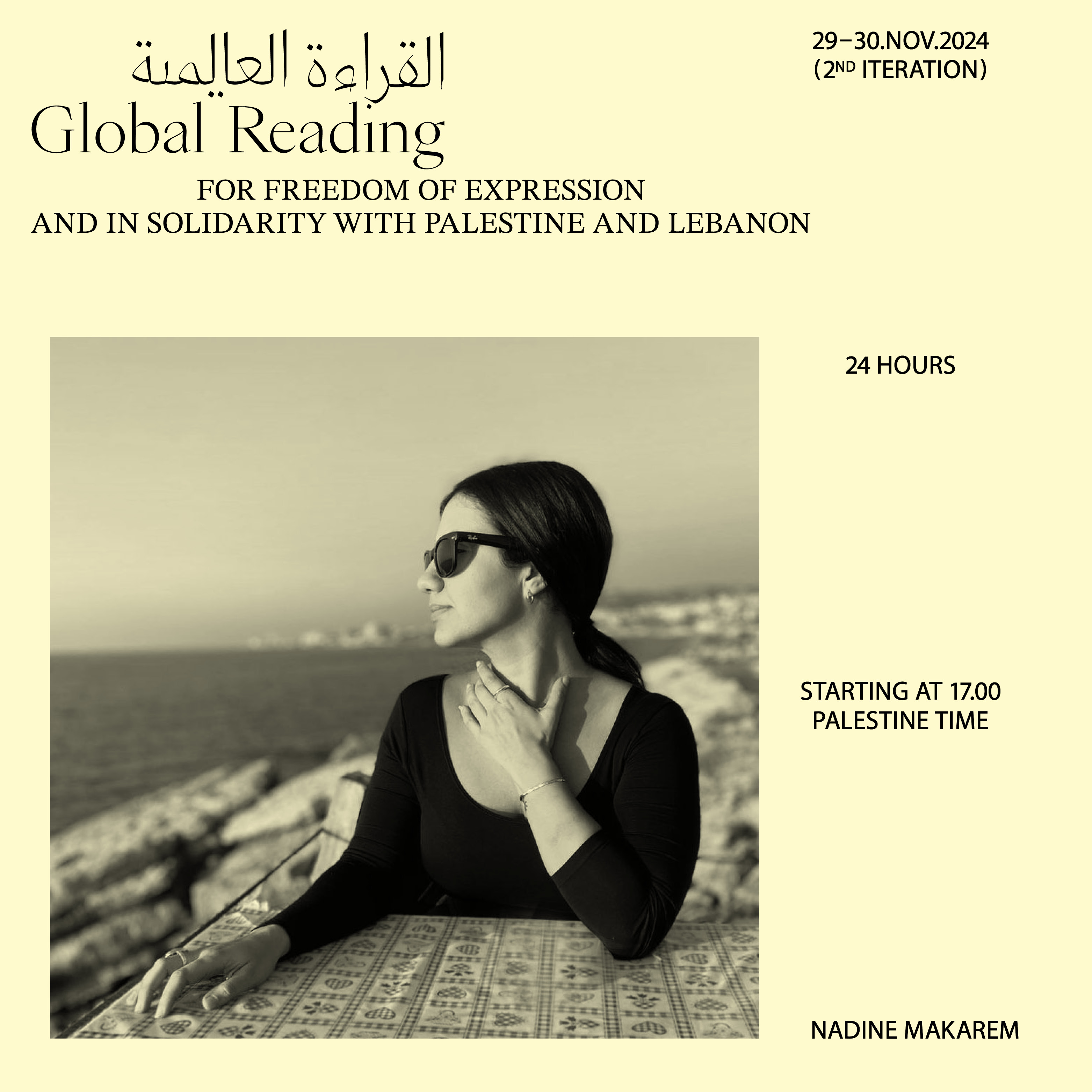
On November 29-30, 2024, Lebanese poetry collective SHATR, alongside a coalition of independent presses, poets, writers, and translators, will take part in a 24-hour GLOBAL READING FOR FREEDOM OF EXPRESSION AND SOLIDARITY WITH PALESTINE AND LEBANON.
This is the second iteration of this online manifestation, and is scheduled to take place on November 29-30, 2024 — beginning at 5pm Palestinian time (EET/GMT+2).
This annual event is a powerful and moving show of unity – poetry and publishing knows no borders and can speak powerfully for the right to free expression. Poetry bears witness!
Readers and attendees will convene online, beginning with Palestinian poets in Palestine and following the sun. As one part of the world rests, another will continue. Participants will share poems in their preferred language, affirming the collective power of words.
SHATR COLLECTIVE (Nadine Makarem, Theresa Sahyoun, and Sarah Huneidi) will host a 30-minute segment, where they’ll be joined by Lara Atallah – beginning at 3.30pm Palestine / Beirut time on Saturday, November 30.
Listen to Shatr Collective’s album “Poppies in October” HERE.
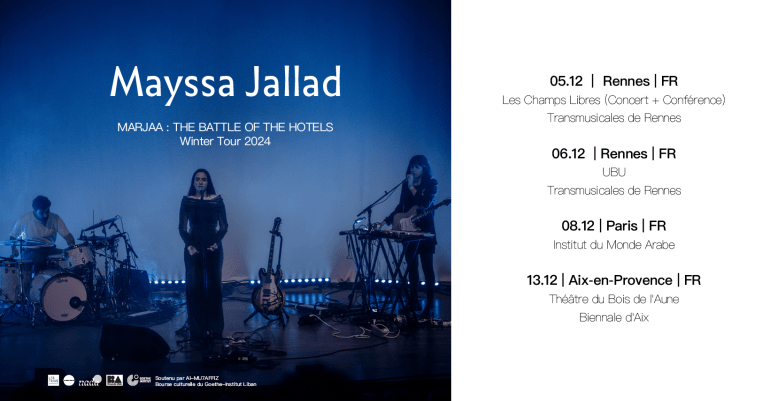
Mayssa Jallad has announced a handful of French dates in support of her album Marjaa: The Battle of the Hotels (#41 in The Wire’s Albums of the Year 2023). She will be accompanied on stage by Julia Sabra (Postcards, Snakeskin) and Pascal Semerdjian (Postcards, SANAM, Préfaces).
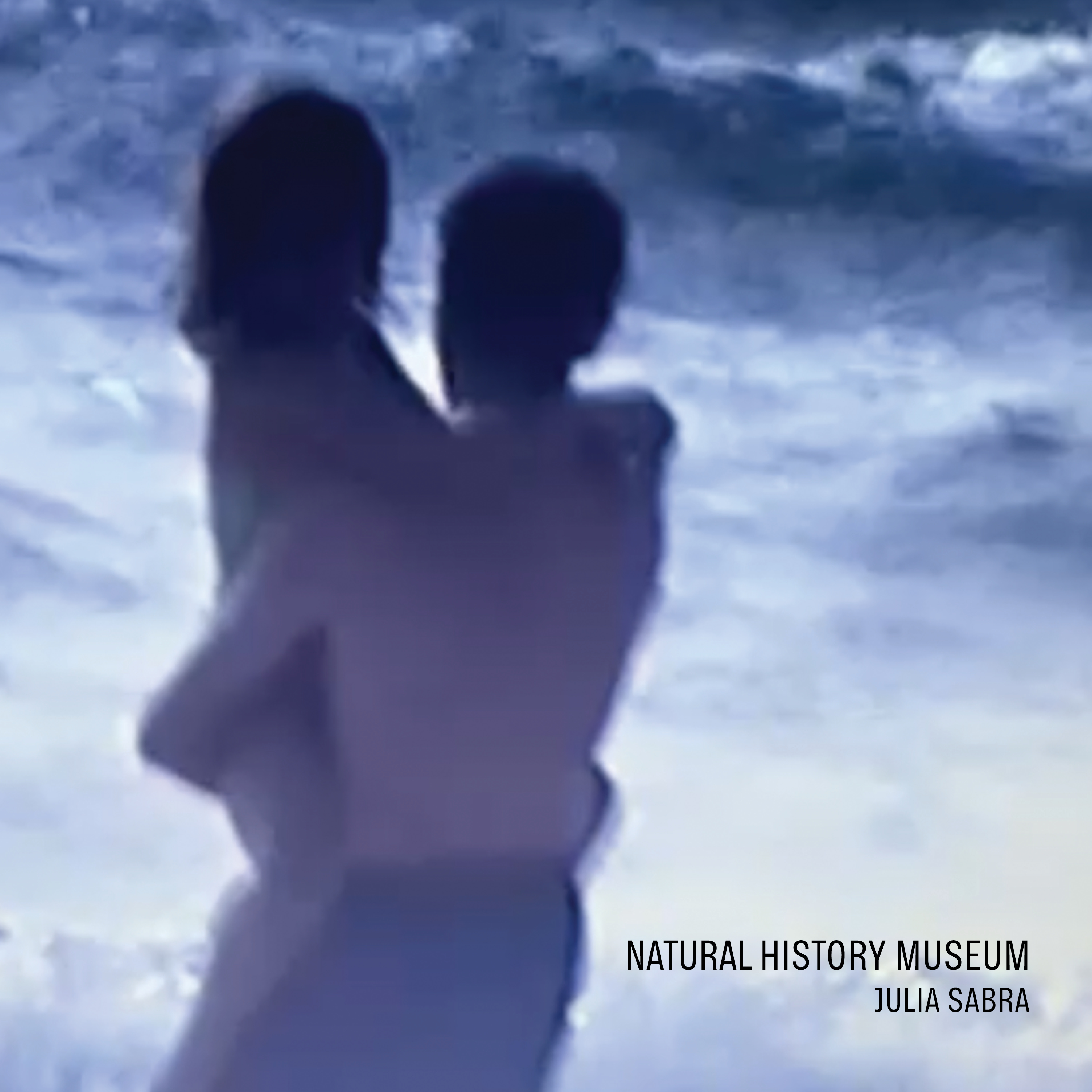
Natural History Museum is the first solo album by Julia Sabra, singer & lyricist with dreampop trio Postcards and electronic duo Snakeskin. Natural History Museum is an intimate collection of songs, fragile and luminous, written between 2020 and 2024.
In Julia’s words, “I wanted to capture these songs the way they were written, by keeping the rawness and fragility intact. Fadi and I decided to record them live to tape, with no overdubs, barely any effect – with all the imperfections. Most of the tracks were done in one take only. Some were recorded in Tunefork Studios in Beirut, and some in the church I grew up going to every summer in Dhour Shweir. These songs would’ve probably stayed in my ‘songs in limbo’ folder on my laptop had it not been for Pascal and Fadi, who pushed me to release them. And for this I’m eternally grateful.”
WATCH the video for “Skyscape” [Directed by Camille Cabbabé]
First single “Skyscape” is currently streaming on Bandcamp and digital platforms. The album will be released in full on November 1st. It will be available as a digital album and a limited edition of 50 cassettes, designed by Josette Khalil in Beirut and printed & packaged in Canada.
Julia wrote Skyscape as part of an online songwriting workshop by Adrienne Lenker from alt-folk band Big Thief — it was an exercise to write a song based on Genesis Baez’s photo Skyscape. “All I could see was the shroud used to wrap the dead with, as it was the beginning of the war on Gaza. The song reimagines a gentler, more dignified goodbye to the dead.”
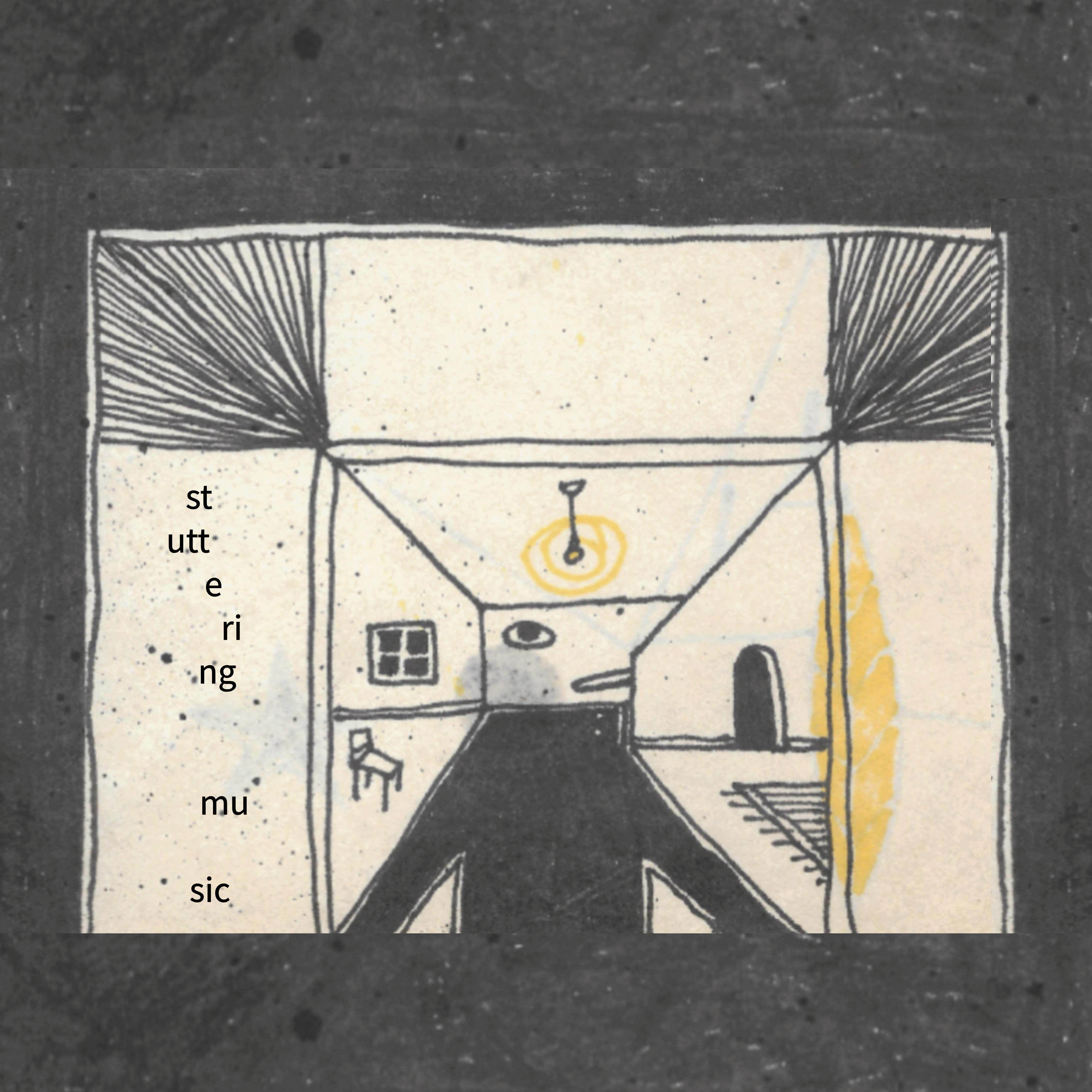
Stuttering Music is the third album by Lebanese musician and video artist Yara Asmar. The album consists of 7 pieces recorded on accordion, metallophone & electronics. The music was initially recorded for a broadcast by Radio AlHara in Bethlehem, Palestine entitled ‘half-baked waltzes 2 fold your laundry to’ – a bi-monthly hour of improvisations.
First excerpt ‘i am a terrible mathematician (and an even worse clown)’ is currently streaming on Bandcamp and digital platforms. The album will be released in full on November 1st. It will be available as a digital album and a limited edition of 50 cassettes, designed by Yara in the summer of 2024, and printed & packaged in Canada.
WATCH the video for “i am a terrible mathematician (and an even worse clown)”
Yara Asmar’s previous two albums, ‘Home Recordings 2018-2021’ (2022) and ‘synth waltzes & accordion laments’ (2023), were released by UK label @hive_mind_records. Hive Mind recently reissued both albums on vinyl in a gorgeous gatefold package. Get it here.
Last but not least, Yara is set to perform at Le Guess Who? Festival in Utrecht, The Netherlands, in November 2024, both as a solo artist and as part of fellow Lebanese artist Liliane Chlela’s project “I, the hybrid and the antidote”.
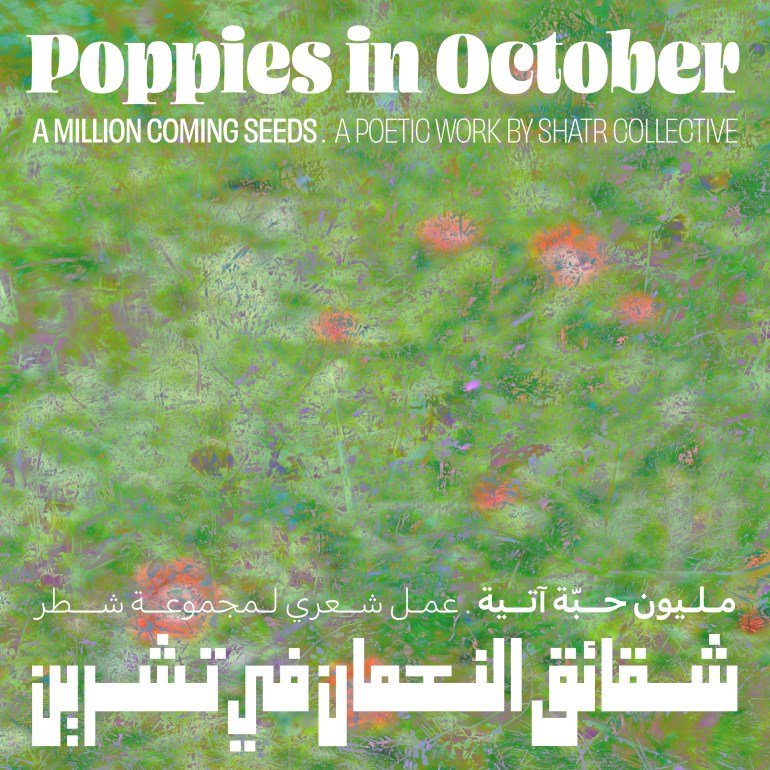
“Poppies in October” is a collection of poetry and music that questions and explores matters of language, violence, and the intertwined fates of Palestine and Lebanon, with particular focus on the now almost-year-long Genocide in Gaza.
SHATR COLLECTIVE is donating all proceeds from the sales of this album to ULYP Gaza Student Emergency Fund, supporting Gazan medical students. Please consider giving what you can (more info at the link below).
The brainchild of Sarah Huneidi, Nadine Makarem, and Theresa Sahyoun, Shatr Collective aims to excite, maintain, and nurture the culture of poetry in Beirut, and showcase modes of expression where poetics are allowed to flourish.
Poppies in October (borrowed from Sylvia Plath’s eponymous poem) joins traditional and popular Palestinian literature with texts written by Sahyoun and Makarem, set to an original soundtrack by Huneidi.
The written works are a tribute to the survivors and martyrs of the genocide in Gaza. Most of the texts were conceived and written in times of heightened emotion and barely underwent any editing process.
The music is a merger of original production and sound clips from historical, literary & media sources, with the intent to encapsulate the chaos of the passing days amid a context of defiance and tragedy.
Currently available on digital platforms and Ruptured’s Bandcamp page as a pay-as-you-will album. Donate as generously as you can.
Recorded by Anthony Sahyoun at Tunefork Studios, Beirut, Lebanon. Produced by Anthony Sahyoun & Shatr Collective. SHATR artwork and album design by Farah Fayyad.
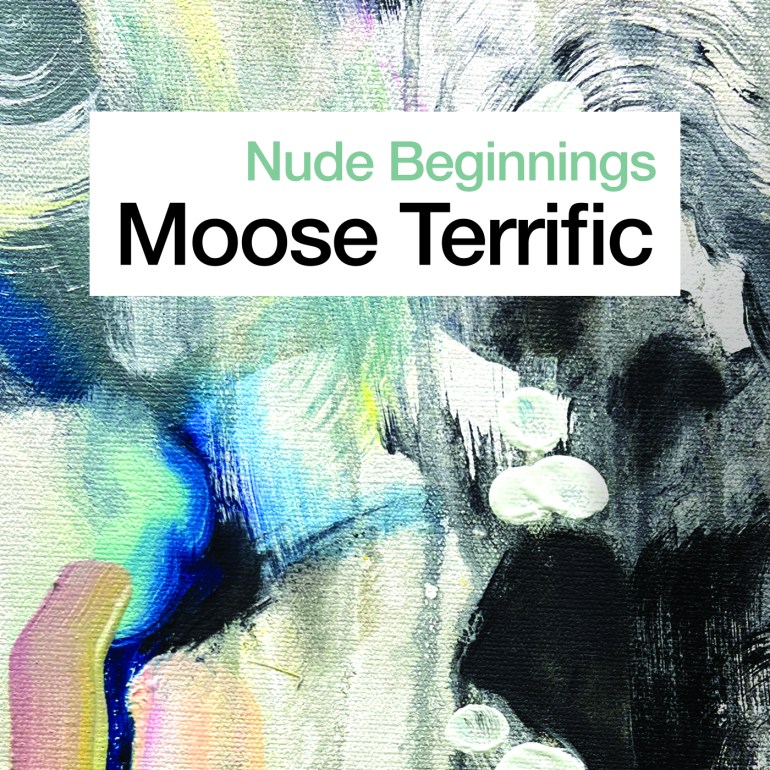
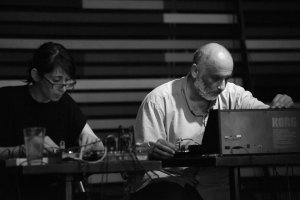
MOOSE TERRIFIC (rptd051) is a Montreal-based experimental electronic duo formed in 2016 and consisting of Sam Shalabi and Tamara Filyavich.
Nude Beginnings is this duo’s second album, and consists of playful modular improvisations peppered with post-punk, jazz, psychedelic and early electronic influences. A blend in which one can recognize subtle influences of Ukrainian, Jewish, Arabic and Canadian musical elements, as per the artists’ cultural backgrounds, life and musical experiences.
Nude Beginnings invites the listener to participate in a rather hopeful game of hide and seek with its auditory universe, combining cheerful rhythms and beats with unexpectedly optimistic harmonies. Far from being a throwback to a different, more carefree time, which Sam and Tamara do not believe ever truly existed, this album is a punk response to the current moment, an invitation to heal in whatever way one chooses to.
TAMARA FILYAVICH is a sound art producer and experimental electronic musician who has lived in Montreal since 1993. Her music draws inspiration from early synthesizer music, Eastern European folklore, and post-punk, among many more influences. She is a member of B.U.M, Prelubbed Sisters, and the duo Tamayugé with Maya Kuroki.
SAM SHALABI is an Egyptian-Canadian composer and improviser living in Montreal. Since his beginnings as a punk musician in the late 70’s, his work has evolved into a fusion of experimental, modern Arabic Music that incorporates traditional Arabic, chaabi, noise, classical, text, free improvisation and jazz. He is a member of Shalabi Effect, Dwarfs of East Agouza, Land of Kush (an experimental 30-member orchestra of which he is the main composer), Karkhana and Nutsack, among many others.
Nude Beginnings was composed, performed and produced in Montreal. Artwork and design by Hatem Imam (Studio Safar).
Available as a limited edition of 60 cassettes, shipping exclusively from our Bandcamp page.
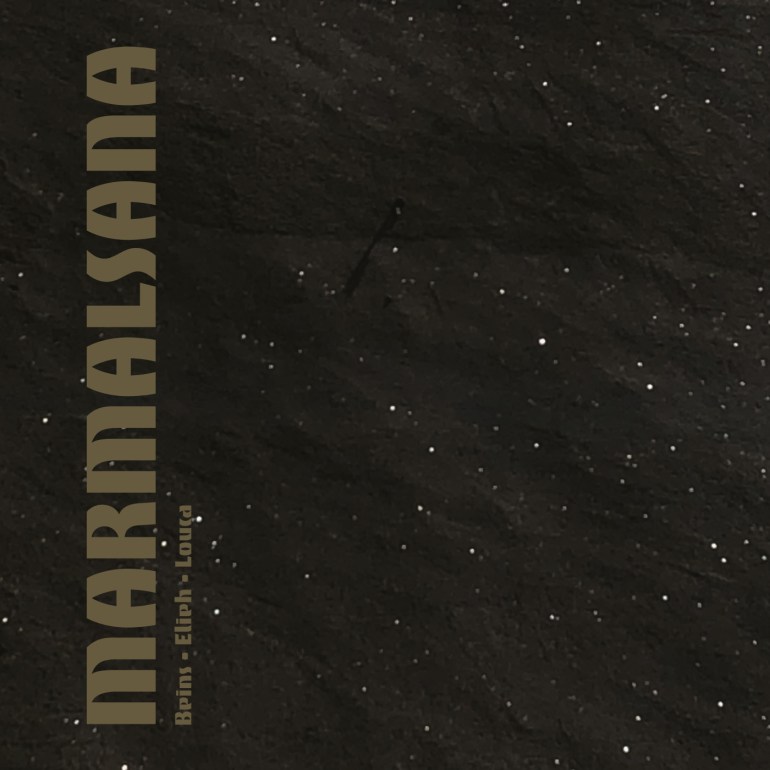
MARMALSANA is a Berlin-based trio that brings together Burkhard Beins on percussion, Tony Elieh on acoustic bass guitar, and Maurice Louca on (acoustic quarter-tone guitar. An outstanding melding of free improv and experimental jazz, if you will.
Based in Berlin and active in the free improv and experimental scenes of the city, Beins, Elieh, and Louca have spent the last decade or so developing various projects with local and international musicians.
Marmalsana is their first collaboration, one for which they decided to forego amplification and rely on acoustic instruments only, employing extended techniques and objects to produce soundscapes of drones, textures, melodies, and polyrhythms.
The album fuses the three musicians’ backgrounds, styles, and influences: they succeed in merging their individual contributions into a unified whole, moving between distinct placements of sound and moments beyond instrumental recognizability. Their journey traverses between Beirut, Berlin, and Cairo, creating in the process a nomadic musical language.
The music on Marmalsana was composed, performed and produced in Berlin in December 2023. Mixed by Burkhard Beins, mastered by Werner Dafeldecker.
Cover photography by Tony Elieh, design by Maya Chami.
The album is currently streaming on all digital platforms. It is also available as a limited edition of 60 cassettes, shipping exclusively from Ruptured’s Bandcamp page.
Following the release of her critically-acclaimed debut LP Marjaa: The Battle of the Hotels in March 2023, Lebanese artist Mayssa Jallad returns with a set of EU/UK tour dates (including shows in London, Berlin and Brussels), as well as a stunning new video directed by Lebanese filmmaker Ely Dagher.
You can watch the video below and read Mayssa’s notes on the historical/geopolitical context.
Apr 21 – Donau Festival, Krems, AT – tickets Apr 24 – Hotel Olympik, Prague, CZ Apr 26 – Sharpe Festival, Bratislava, SK – tickets Apr 27 – Silent Green, Berlin, DE – tickets May 1 – UCL, London, UK (workshop) May 2 – Folklore Hoxton, London, UK – tickets May 3 – Les Aralunaires, Arlon, BE – tickets May 4 – Les Nuits Botanique, Brussels, BE – tickets
WATCH the video for “Holiday Inn (January to March)”
Directed by Ely Dagher, the video for Mayssa’s album track “Holiday Inn (January to March)” is a visually stunning work exploring the album’s theme of memory and decay. Archival images of a war-torn Beirut early in Lebanon’s Civil War are digitally processed into a series of fractured 3D models, through which we are slowly navigated. The results are eerily haunting, and resonate powerfully with current events.
According to Dagher, “I was looking for a visual language that could express the fragility and complexity of an elusive and broken memory – something fragmented and incomplete. Archive footage from the battles were given a new life and perspective to craft a collage that blends details from the vivid realism of the battles with the fluid capacity of memory. Bodies, buildings, feelings and violence fragmented.”
Mayssa writes that “Holiday Inn is an immense modernist high rise hotel with a revolving rooftop restaurant, overlooking the Mediterranean… It was inaugurated in 1974, a few months before the beginning of the battle of the hotels, in which it was a main protagonist, first invaded by the blues (right wing nationalists) and then the reds (left wing pro Palestinians). For 5 months, with 5 star hotel amenities, blue gunmen terrorized and controlled the city. During this period, two massacres occurred: on January 18, in Karantina, the blues killed 1,500 Muslims and Palestinians. On January 20th, in Damour, the reds killed 1,500 Christians. Spiraling into endless violence and retaliation.
The phenomenon of high rises in Beirut, these weapons of war that created the perfect conditions for urban warfare, is an often overlooked effect of the 1948 Nakba, when Israeli Occupying Forces expelled Palestinians and destabilized the Arab region. Wealthy Palestinians, Syrians and Iraqis invested their money in Lebanon to avoid the brunt of political and economic crises in their home countries. In parallel, Gulf countries that had struck oil around that period, also started investing in Beirut . A “Golden Era” of grandiose projects for the 1% was born, luxury hotels, nightclubs, towers, ignoring the ‘belt of misery’ being formed around the capital. A luxury so vulnerable, so easily destabilized that it was invaded 6 months after the civil war broke out, again, as an effect of the Nakba and the political division since the Palestinian Liberation Organization took post in Lebanon.
Today, these buildings exist as relics of the past, among new skyscrapers that threaten to repeat the same history over and over again. Are we remembering, or are we just reliving the past? We long to forget, and end up falling into the same traps of violence and false prosperity, over and over again.”