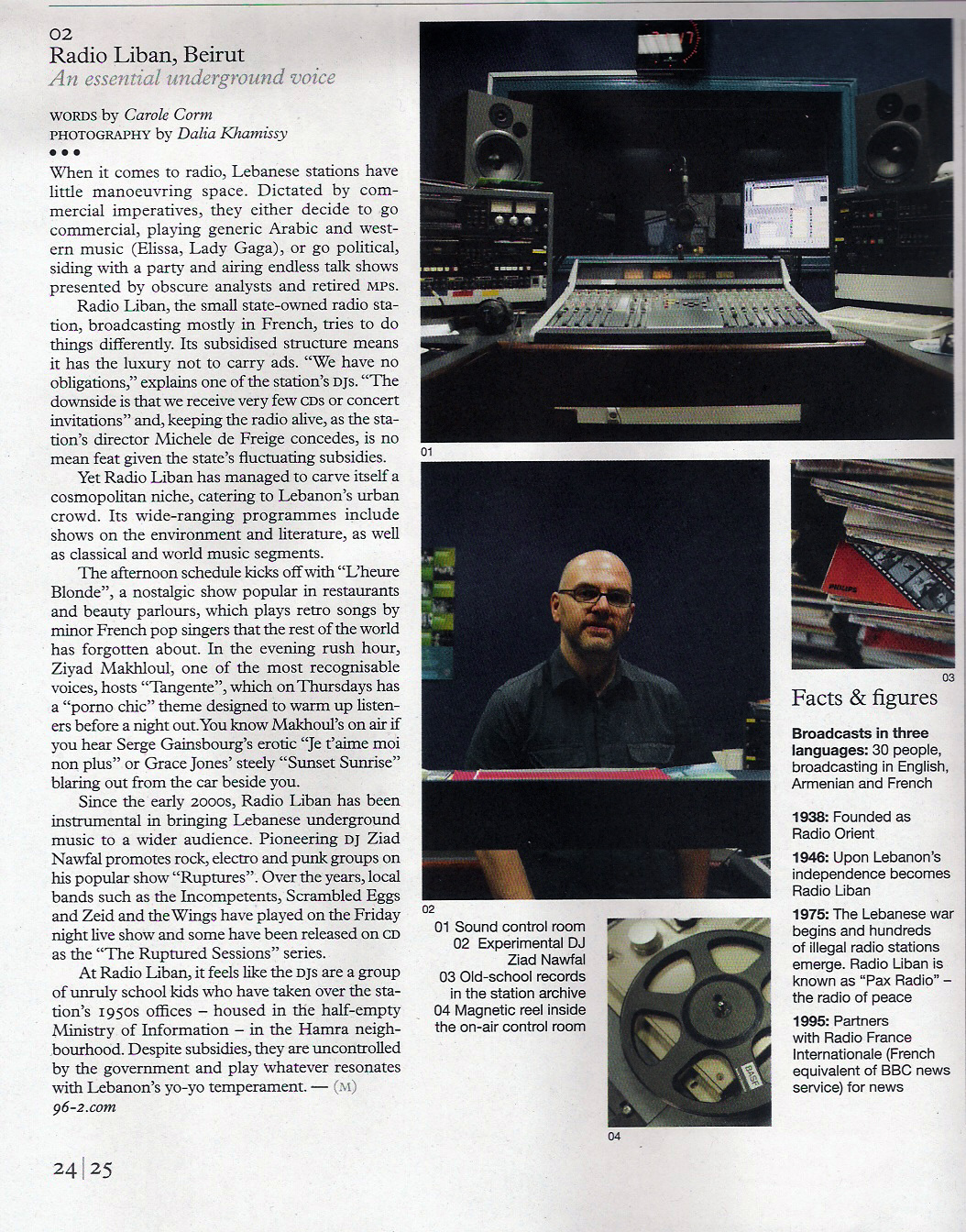
Press // Ziad Nawfal & Radio Liban // Monocle Mediterraneo Summer 2010
Lebanese Indie Music Label // Promoter & Distributor // Radio Show
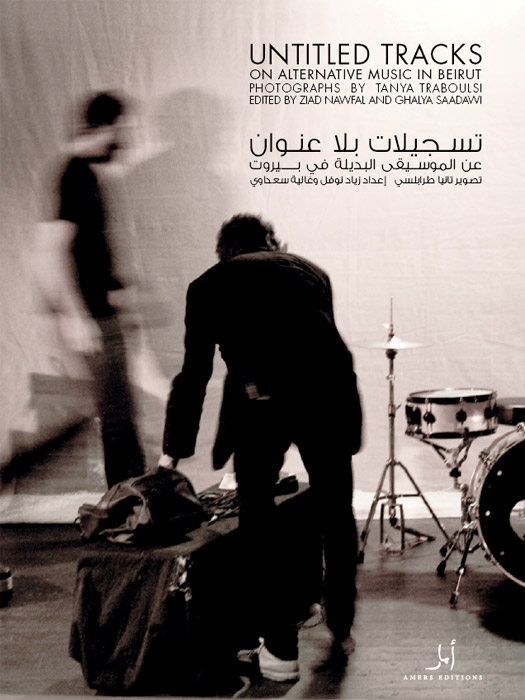
UNTITLED TRACKS: On Alternative Music in Beirut
Photographs by Tanya Traboulsi
Edited by Ziad Nawfal and Ghalya Saadawi
Design by Youmna Habbouche
Published by Amers Editions, Beirut, Lebanon
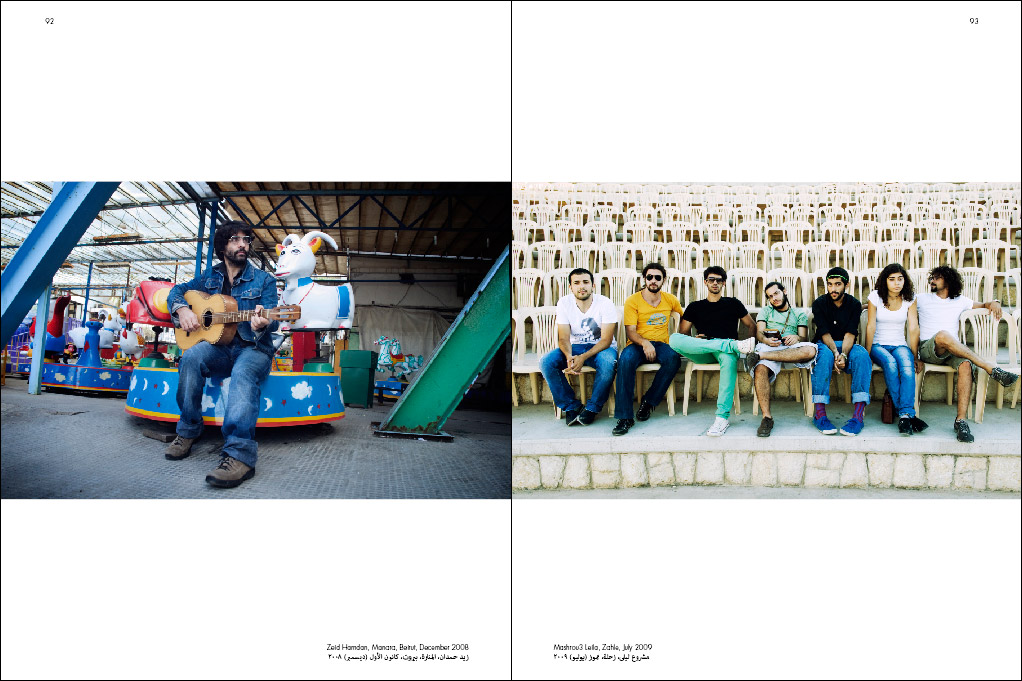
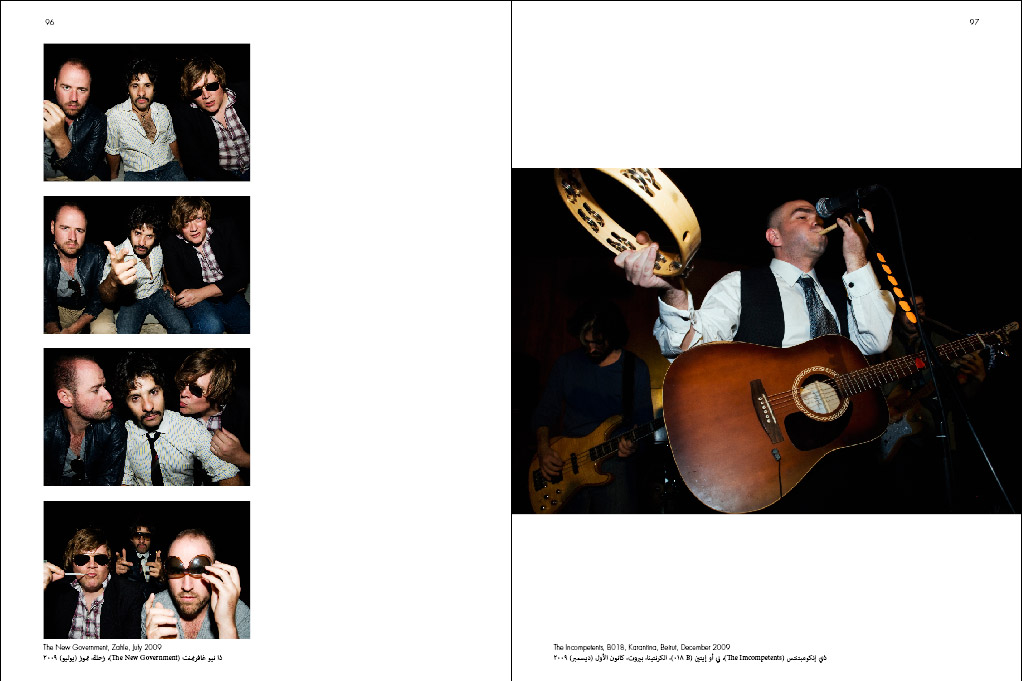
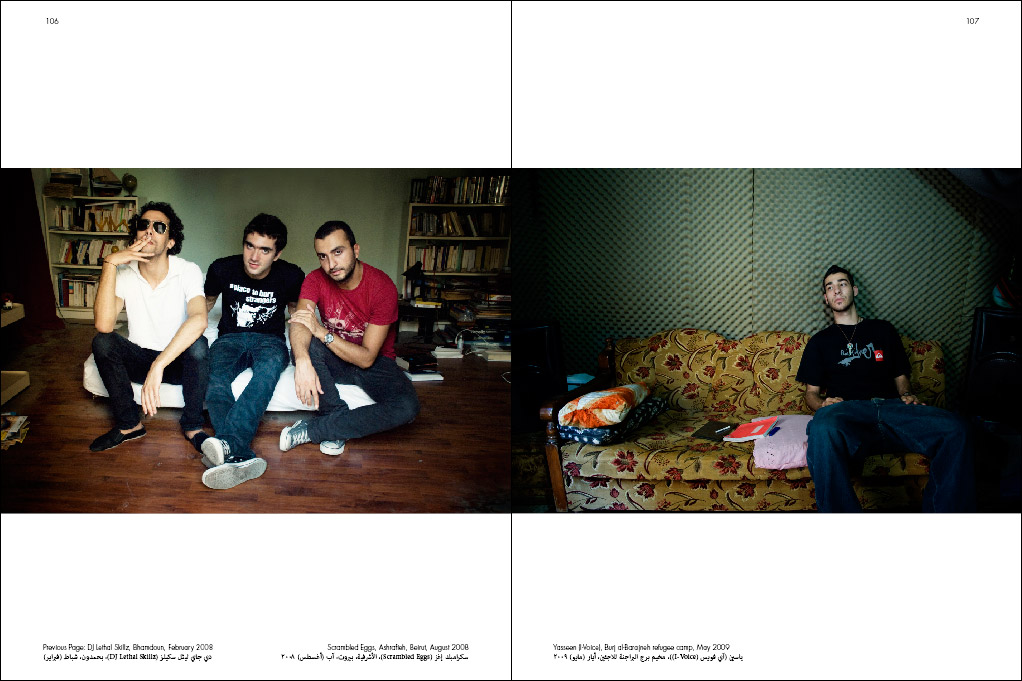
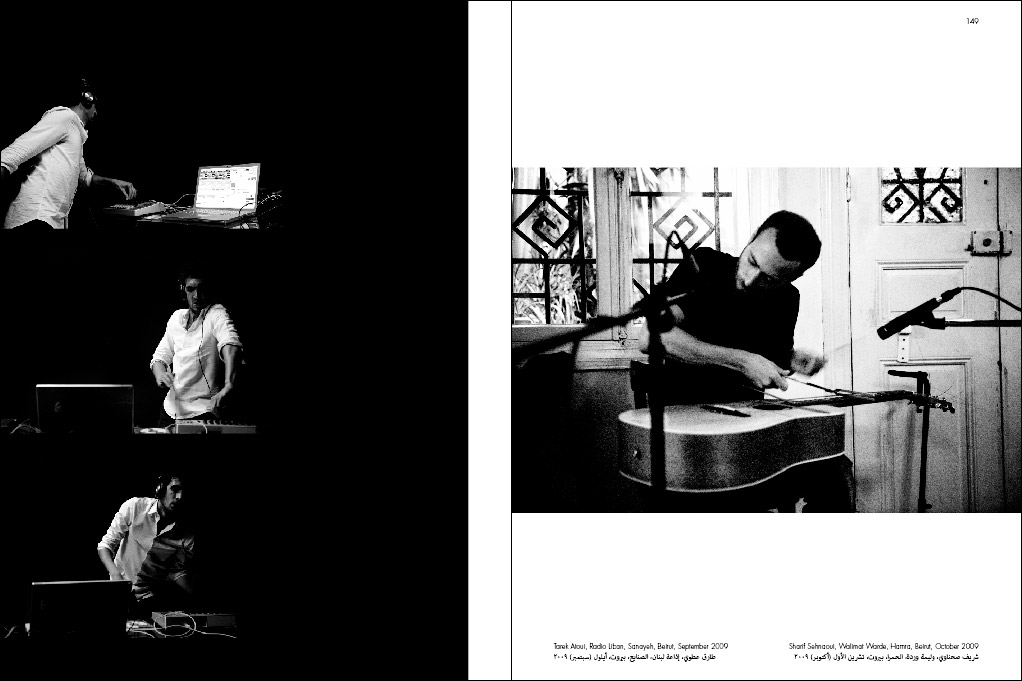
Untitled Tracks: On Alternative Music in Beirut is a collection of texts and photos which begins to chart the manifold, mutating and increasingly visible alternative musical landscapes in Beirut. Through a generous series of photographs taken from Tanya Traboulsi’s ongoing project Music is Life, as well as reflective texts on topics such as the melancholy sound of Soapkills, the politics and relevance of noise, and the interference of genres, this publication investigates the resonances of music and noise in the organized chaos and politics of everyday life.
Contributions by Serge Abiaad, Seth Ayyaz, Rayya Badran, Charbel Haber, Nizar Mroueh, Ziad Nawfal, Ghalya Saadawi, Walid Sadek and Kaelen Wilson-Goldie.
[This article was written by Ziad Nawfal for PRIME JORDAN MAGAZINE in 2007]
Despite the traces and scars of numerous battles and confrontations, the city of Beirut manages to this day, as the song goes, to “shake itself up, dust itself off, and start all over again”… This constant state of rejuvenation is found in various walks of Lebanese life, but more so in the fields of art, and especially that of music.
The city of Beirut and its neighborhoods are alive with the sounds, sonorities and tunes of hundreds of musicians, moving at ease between different styles and categories, from traditional workouts to oriental jazz, from rap to punk, and from dance-floor electro to more nuanced strands of electronica…
In a city famous from its happy blending of cultures and influences, Lebanese bands also operate a mixture of genres: Soapkills’ explosive cocktail of traditional Arabic music and electro has made them the best-known duo of the Middle Eastern Underground, and one of its finest exports. Their first album, Bater, features outstanding contributions from local jazz musicians Rabih Mroué (flute) and Walid Sadek (trumpet).
The Soapkills’ main man, Zeid Hamdan, is also a towering presence on the rock scene, as guitar player with the New Government. The latter are the true dandies of the Lebanese rock scene. Coming from different musical backgrounds, the perfect synergy these five musicians create has already resulted in the New Government Strikes album, which combines great melodies and subtlety with punk energy and style. Flashes of British ‘60s psychedelia (Kinks, Small Faces) abound, interspersed with modern flourishes.
In another corner of the rock ‘front’, stand the Scrambled Eggs. By far one of the most interesting alternative rock bands operating in Beirut today, the Scrambled Eggs’ music is dark, strange and fascinating, and provides the perfect soundtrack to post-war Beirut.
Over the course of 3 albums, and then some, the band has managed to create its own distinctive sound, a fine mesh of guitars and noises, pushing to the extreme the search for harmony in chaos.
Jawad Nawfal knows a great deal about the fine line(s) between harmony and chaos. Not content with his status as Beirut’s first and foremost Drum&Bass/HardTech DJ, he has created an alter-ego for his more ‘restrained’ musical ventures, under the moniker Munma. The band’s first release, 34 Days, is a set of 6 electro-ambient tracks, featuring minimal beats, ominous vocal samples, and a rich tapestry of interlocking, layered sounds. 34 Days recalls the ethereal, hushed moods of Warp label artists such as Boards of Canada and Aphex Twin at their ambient best; with an oriental twist, added for good measure.
Last but not least, Beirut’s rap scene is filled with various luminaries: Ashekman, RGB, Kitayoun, Katibe Khamse, and of course Rayess Bek… Wael Kodeih (aka Rayess Bek) single-handedly created the Lebanese rap scene in the ‘90s with his band Aks’ser. They’ve been growing ever since, and released their first full-fledged album on major label EMI in 2006. Wael’s solo project Rayess Bek has allowed him to deal with more serious issues; he raps about social, economical and political problems: the corrupt government of his country, a society on the brink of collapse, and disoriented youth.
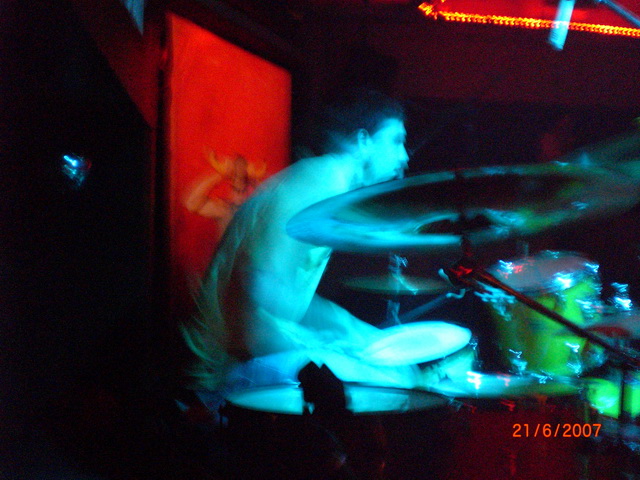
[Photo of Malek Rizkallah, drummer with Scrambled Eggs, by Ziad Nawfal]
 Ruptured Music